What Are the Top Types of Stainless Cable?
Stainless cable is not one product; its construction determines flexibility, strength, and how it behaves under repeated movement. The World Stainless 2023 production report recorded 58.4 million tonnes of global stainless-steel output. That figure describes the wider material supply, not cable production, but it shows the scale behind stainless applications. The choice still comes down to the job. A cable beside a salt-sprayed waterfront may need different corrosion resistance from one supporting an indoor railing.
A practical paraphrase—not a verbatim quotation—of metallurgist Harry Bhadeshia’s materials-science teaching is: “Choose materials by their composition and service conditions, not by appearance alone.” That principle helps compare common constructions, including 1x19 strand, 7x7 cable, and more flexible 7x19 cable. A tightly laid 1x19 cable holds its line well, but bends less readily. The 7x7 construction offers a middle ground; 7x19 bends more easily around pulleys. Small details matter. Stainless grade, cable diameter, fittings, and installation all affect performance. Even polished wire can disappoint when the grade or termination is poorly matched.
This guide examines the top stainless cable types, their practical strengths, and their trade-offs. It also considers where 304 and 316 stainless steel may suit different environments. These are useful starting points, not universal answers. Real installations deserve careful review.
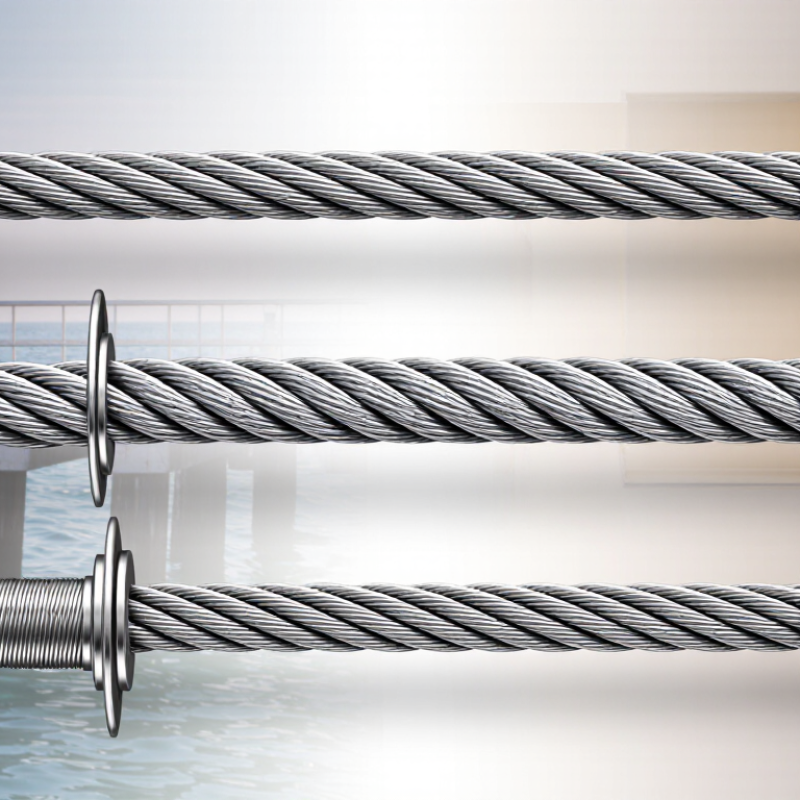
How Is Stainless Steel Cable Classified?
Stainless cable is classified by alloy grade, construction, and finish—not diameter alone. Grade 304 suits many general applications, while molybdenum-bearing 316 is often selected for coastal exposure. Neither grade is immune to corrosion; trapped salt and poor rinsing can still leave marks. The World Stainless report Stainless Steel in Figures 2024 records 58.4 million tonnes of global stainless crude-steel production in 2023. That figure describes the wider material market, not cable performance.
Construction describes how wires form strands and ropes. A 1x19 cable has one strand of 19 wires; it is stiff and holds a straight line well. A 7x7 cable offers moderate flexibility, while 7x19 bends more easily around small fittings. ASTM A492 provides a recognized specification for stainless-steel rope wire. Buyers should also check diameter, tensile requirements, finish, and test documentation. I would not choose by grade alone; the installation environment can change the decision.
Tip: Match cable construction to bend radius. Check salt exposure, too. Ask for a material certificate and inspect cut ends, where corrosion may become visible.
What Are the Main Strand and Wire Constructions?
Stainless cable is built from individual wires twisted into strands, then arranged into a larger cable. The construction affects flexibility, strength, and how the cable behaves around a pulley. A 1x7 cable has one strand containing seven wires. It holds its shape well, but bends less easily. A 1x19 construction uses nineteen wires in one strand, giving a smoother surface and useful stiffness for straight runs.
For tighter bends, 7x7 and 7x19 constructions are common options. Each has seven strands; the first number after “x” describes the wires in each strand. More wires generally allow easier bending, though the actual performance depends on cable diameter, material, and fittings. The numbers can seem fussy. Still, construction alone cannot confirm a safe working load; check the supplier’s specifications for the exact cable.
Tips: Match the cable to the bend radius, not just the expected load. Inspect the wire ends, too. Loose or broken wires can signal wear, even when the cable looks clean.
How Do 1×7 and 1×19 Cables Compare?
What Are the Top Types of Stainless Cable?
How Do 1×7 and 1×19 Cables Compare?
A 1×7 cable contains seven wires twisted into one strand. A 1×19 cable uses nineteen smaller wires in one strand. Both are common stainless cable constructions, but they feel different in use. The 1×7 is generally stiffer and can resist bending well under tension. The 1×19 bends more readily and has a smoother surface. Neither is truly flexible like a multi-strand wire rope. That distinction matters.
For straight runs, such as bracing between posts, 1×7 may be a practical choice. It can be harder to route around tight corners. A 1×19 often suits railing infill or rigging where a neater finish and easier handling matter. But construction alone does not determine strength. Check the cable’s diameter, stainless steel grade, and published working-load information. Corrosion resistance comes mainly from the alloy and environment, not simply the wire count. Salt spray changes the equation.
Tips: Match the cable to the path it must follow. Avoid forcing a stiff 1×7 around small fittings; sharp bends can damage wires. Confirm that terminals are compatible with the exact cable construction. It is easy to overvalue flexibility, too. Measure the actual load and span, then compare manufacturer specifications rather than guessing from appearance.
When Are 7×7 and 7×19 Cables Used?
What Are the Top Types of Stainless Cable?
When Are 7×7 and 7×19 Cables Used?
The choice between 7×7 and 7×19 depends mainly on movement and bending. A 7×7 cable contains seven strands of seven wires, or 49 wires total. It feels comparatively firm and holds a straighter line, making it useful for fixed supports, guard panels, and short control runs. The Wire Rope Users Manual identifies rope construction as a key factor in flexibility. Still, “firmer” does not mean suitable for every fixed installation; fittings, tension, and exposure matter too.
A 7×19 cable contains 133 wires: seven strands of 19 wires. Its finer wires make it more flexible, so it generally suits pulleys, moving controls, and routes that bend repeatedly. Picture a cable wrapping around a small sheave: 7×19 usually bends more readily, while 7×7 may resist the turn. But flexibility alone is a poor selection rule. Sheave diameter, cable diameter, load cycles, and corrosion conditions all affect service life.
ISO 2408:2017 sets requirements for steel wire ropes, but a construction label does not tell you the cable’s actual working capacity. Check the product’s certified breaking force and the fitting specifications before installation. For a short, static run, 7×7 may be enough. For repeated bends, 7×19 is often the more practical choice. I would still verify the hardware; that step is easy to overlook.
What Are the Top Types of Stainless Cable? - When Are 7×7 and 7×19 Cables Used?
| Cable construction |
Wire arrangement |
Flexibility |
Common applications |
When to choose it |
| 1×19 |
One strand of 19 wires |
Low; holds a relatively straight line |
Architectural cable railings, static bracing, and straight tensioning runs |
Choose it for straight, lightly curved installations where low stretch and a clean profile matter more than bending around pulleys. |
| 7×7 |
Seven strands, each containing seven wires (49 wires total) |
Moderate |
General-purpose support lines, control cables, and small-diameter marine or outdoor cable runs |
Choose it when you need more flexibility than 1×19, but the cable will not be repeatedly bent around small sheaves. |
| 7×19 |
Seven strands, each containing 19 wires (133 wires total) |
High; bends more readily than 7×7 |
Winch lines, pulley systems, moving control cables, and applications involving repeated bending |
Choose it when the cable must travel around sheaves or flex frequently. Check the equipment’s minimum sheave diameter and load requirements. |
Selection note: Stainless cable is commonly specified in grades such as 304 or 316. Grade, cable diameter, construction details, and manufacturer specifications affect corrosion resistance and breaking strength; verify the rated working load for the exact product and application.
How Do Stainless Steel Grades Affect Cable Selection?
How Do Stainless Steel Grades Affect Cable Selection?
Grade determines how stainless cable handles moisture, salt, and cleaning chemicals. The International Molybdenum Association’s published grade-composition data lists 304 with about 18–20% chromium and 8–10.5% nickel. Grade 316 typically contains 16–18% chromium, 10–14% nickel, and 2–3% molybdenum. Those percentages are not a guarantee. They describe alloy composition, not the cable’s service life.
That difference matters near seawater, road salt, or pool chemicals. Molybdenum helps 316 resist chloride-related pitting better than 304. Still, 316 is not rust-proof. Salt trapped between strands, inside swaged sleeves, or around fittings can create corrosion sites. Rinsing and inspection help, but maintenance is easy to overlook.
For dry indoor runs, 304 may be a practical choice; exposed coastal installations often justify 316. ASTM A580/A580M covers stainless steel wire requirements, so check the specified grade and mill documentation for the actual cable. Confirm fittings match the exposure, too. A higher alloy cannot fix poor drainage, damaged surfaces, or an undersized cable. I would weigh the site conditions and maintenance routine before choosing by grade alone.
Top Types of Stainless Steel Cable and How Grades Affect Selection
A comparison of common cable constructions by nominal number of wires.
Wire counts are calculated from the construction notation (for example, 7 × 19 means 7 strands of 19 wires); actual constructions can vary by specification. More wires can allow greater flexibility when other design factors are comparable, but wire count alone does not determine strength. Type 304 is commonly used for general corrosion resistance, while type 316—with molybdenum—generally offers better resistance to chloride-related pitting. Neither grade is immune to corrosion; choose based on the environment and the cable’s specified construction and strength.