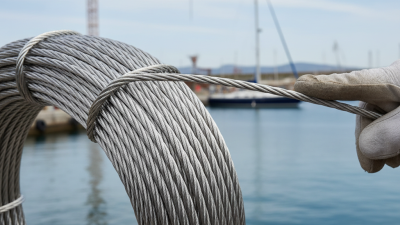
Choosing among the top stainless cable manufacturers worldwide requires more than comparing prices or catalog photographs. A dependable supplier must prove material grade, breaking strength, construction accuracy, and production consistency. Common options include 1x7, 7x7, and 7x19 cable designs. Each behaves differently around pulleys, terminals, salt spray, and repeated vibration.
The World Stainless Association reported approximately 58.4 million tonnes of crude stainless steel production in 2023. Its Stainless Steel in Figures 2024 report also reflects stainless steel’s broad use in infrastructure, transport, and industrial equipment. These trends support continued demand for stainless cable in marine railing, architectural tension systems, food-processing machinery, and outdoor structures. Grand View Research’s stainless steel wire market analysis also identifies construction, automotive, and industrial applications as important growth areas. Still, market growth does not guarantee quality.
Corrosion specialist L. L. Shreir wrote, “Corrosion is the destructive attack of a metal by chemical or electrochemical reaction with its environment.” That warning remains practical. A polished cable can still fail if chloride exposure, crevice corrosion, poor swaging, or incorrect alloy selection is ignored. Grade 316 generally offers stronger chloride resistance than 304, but it is not corrosion-proof. Not even close.
This guide evaluates leading manufacturers through technical documentation, factory experience, quality systems, testing practices, and customer support. It considers ISO certification, traceability records, tensile testing, surface finish, and delivery reliability. Some comparisons remain imperfect because manufacturers publish different specifications. That limitation deserves attention. A careful buyer should request current test certificates, installation guidance, and application-specific recommendations before selecting a supplier.
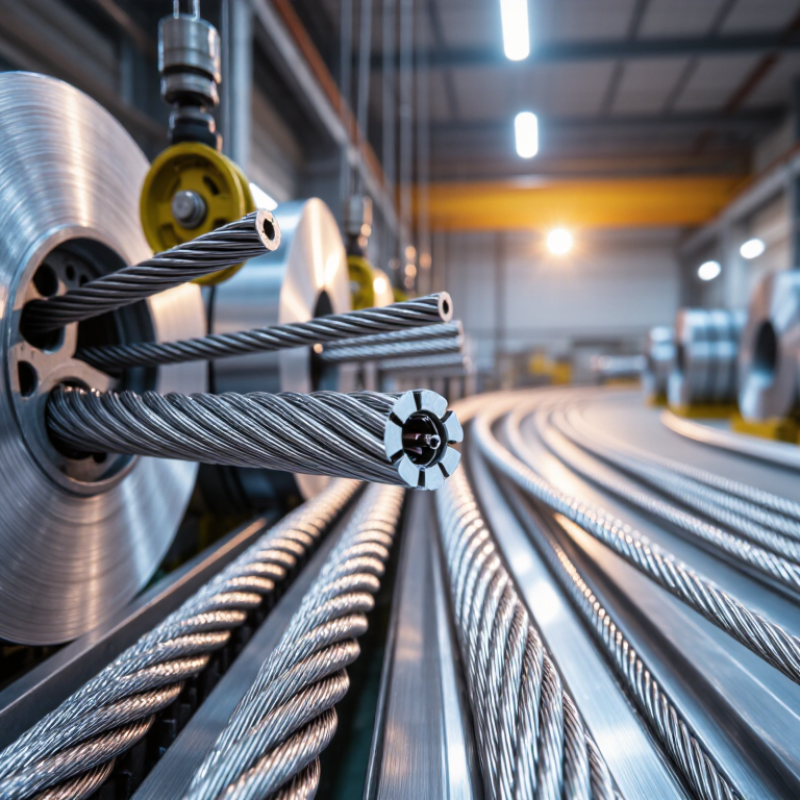
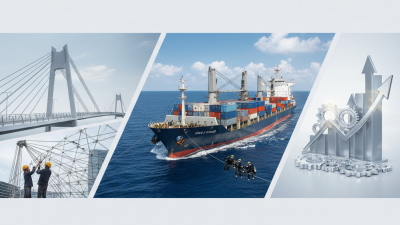
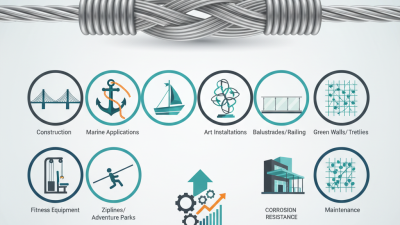
Stainless steel cable supports construction, marine, transport, energy, and architectural projects worldwide. Global demand is rising as infrastructure owners seek durable materials with lower maintenance needs. Coastal bridges, suspension railings, and offshore platforms often face salt spray, humidity, and constant vibration. These conditions make corrosion resistance a practical purchasing factor.
Leading manufacturers compete through material control, production consistency, and dependable testing. Common grades include 304 and 316 stainless steel, while specialized projects may require stronger alloys. Cable diameter, strand design, breaking load, and flexibility must match the installation environment. Reliable producers document heat numbers, tensile results, and dimensional inspections. Traceability matters when cables are installed above people or in difficult-to-reach locations.
Demand is not perfectly predictable. Construction cycles, shipping costs, and regional infrastructure budgets can change quickly. Some buyers still choose oversized cable without checking fatigue, fittings, or anchor loads. That approach wastes material and may not improve safety. Experienced suppliers usually review drawings, operating temperatures, bend radii, and exposure conditions before recommending a specification. Factory testing is valuable, but field installation can still introduce errors. A well-made cable needs correct handling, storage, tensioning, and periodic inspection. Manufacturers serving global markets must also manage different standards, documentation expectations, and delivery conditions across regions.
| Industry Dimension | Product or Market Segment | Verified Technical or Market Data | Typical Application | Global Demand Indicator | Reference Basis |
|---|---|---|---|---|---|
| Material Grade | Type 304 stainless steel cable | Chromium content is generally 18.0–20.0%; nickel content is generally 8.0–10.5%, subject to the applicable product specification. | Architectural structures, general industrial equipment, indoor cable assemblies, food-processing environments with moderate corrosion exposure. | High volume | ASTM stainless-steel chemistry specifications |
| Material Grade | Type 316 stainless steel cable | Usually contains approximately 2.0–3.0% molybdenum, which improves resistance to chloride-related corrosion compared with Type 304. | Marine equipment, coastal construction, chemical processing, wastewater facilities, and outdoor architectural systems. | High growth demand | ASTM A240 / A276 chemical composition ranges |
| Material Grade | Type 316L stainless steel cable | Low-carbon variant with carbon content limited to a maximum of 0.030% under common ASTM specifications. | Welded architectural assemblies, pharmaceutical equipment, hygienic processing areas, and corrosion-sensitive fabrication. | Specialized demand | ASTM A240 / A276 requirements |
| Cable Construction | 7 × 7 construction | Seven strands, with seven wires in each strand; commonly selected where moderate flexibility and compact geometry are required. | Balustrades, tensioning systems, signage, light-duty rigging, and general architectural cable systems. | Stable demand | Common wire-rope construction terminology under ISO and EN practice |
| Cable Construction | 7 × 19 construction | Seven strands, with nineteen wires in each strand; provides greater flexibility than 7 × 7 construction at comparable diameter. | Marine control systems, sheaves, movable mechanisms, suspension components, and flexible cable assemblies. | High demand | ISO 2408 wire-rope construction classification |
| Cable Construction | 1 × 19 construction | One strand containing nineteen wires; offers relatively high axial stability and low rotational tendency but limited flexibility. | Architectural stays, handrail systems, façade support, mast bracing, and fixed tension applications. | Strong architectural demand | Industry-standard stranded-wire configuration |
| Surface Finish | Bright or uncoated stainless finish | Preserves the natural corrosion-resistant stainless-steel surface and is widely used where appearance and cleanability are important. | Interior architecture, food-service installations, display systems, and visible cable railings. | Broad demand | Stainless-steel surface-finish practice |
| Surface Finish | Electropolished finish | Electrochemical treatment removes a controlled amount of surface material and can improve cleanability and surface smoothness. | Pharmaceutical, biotechnology, medical, semiconductor, and high-hygiene processing environments. | Premium niche | Electropolishing process standards and hygienic-design practice |
| End Fitting | Swaged terminals and fittings | Mechanical termination formed by compressing a fitting onto the cable; selection must match cable diameter, construction, material, and rated load. | Architectural tension systems, railing assemblies, lifting accessories, and custom cable mechanisms. | Project-driven demand | Manufacturer engineering data and applicable lifting standards |
| End Fitting | Threaded terminals and turnbuckles | Allow cable length adjustment and tension control; corrosion-resistant stainless hardware is commonly paired with stainless cable. | Balustrades, shade structures, façade cables, signage, and lightweight structural applications. | Strong construction demand | Architectural cable-system engineering practice |
| Application Sector | Marine and coastal infrastructure | Demand is supported by exposure to salt spray, chloride contamination, humidity, and cyclic wet-dry conditions; Type 316 and 316L are frequently specified over Type 304 for severe exposure. | Boat rigging, dock systems, coastal façades, offshore access equipment, and marine barriers. | High corrosion-performance demand | Marine corrosion engineering practice |
| Application Sector | Architecture and construction | Stainless cable systems are selected for high visual transparency, low routine maintenance, corrosion resistance, and compatibility with glass and steel structures. | Cable railings, façades, pedestrian bridges, atriums, canopies, and tension-supported structures. | Largest visible-use segment | Architectural specification practice |
| Application Sector | Food, beverage, and pharmaceutical processing | Stainless materials are favored for corrosion resistance, cleanability, and compatibility with sanitation procedures; low-carbon grades are often selected for welded assemblies. | Conveyors, hygienic guards, processing equipment, suspended components, and cleanroom systems. | Consistent demand | Hygienic equipment and stainless-steel design practice |
| Application Sector | Industrial lifting and equipment | Performance depends on cable construction, metallic area, breaking force, termination efficiency, bend radius, and inspection regime; stainless cable is used where corrosion resistance is prioritized. | Light-duty lifting, access systems, instrumentation, control cables, and corrosion-sensitive machinery. | Standards-controlled demand | ISO 2408 and relevant lifting-equipment regulations |
| Regional Demand Pattern | Asia-Pacific | Demand is associated with urban construction, infrastructure expansion, shipbuilding, industrial manufacturing, and coastal development. | Construction projects, marine equipment, industrial machinery, and architectural hardware. | Fastest expansion profile | Construction and industrialization indicators |
| Regional Demand Pattern | Europe | Demand is supported by renovation, architectural design, marine applications, food and pharmaceutical manufacturing, and emphasis on long service life. | Building renovation, transport infrastructure, hygienic processing, and premium architectural systems. | High-value demand | European construction and industrial design requirements |
| Regional Demand Pattern | North America | Demand is linked to commercial construction, infrastructure maintenance, marine installations, industrial automation, and replacement of corrosion-prone components. | Commercial buildings, bridges, industrial facilities, marine systems, and safety-related installations. | Mature and replacement-led | North American construction and maintenance practice |
| Key Purchasing Criteria | Corrosion resistance and service environment | Grade selection should consider chlorides, temperature, chemicals, humidity, crevice conditions, and required service life rather than relying on grade name alone. | All outdoor, marine, hygienic, and chemically exposed installations. | Primary specification factor | Stainless-steel corrosion-selection principles |
| Key Purchasing Criteria | Compliance, traceability, and testing | Important documentation may include material certificates, dimensional checks, breaking-force test results, construction details, and inspection records. | Infrastructure, lifting, architectural, marine, and regulated industrial projects. | Increasing importance | ISO 2408, ASTM specifications, and project quality requirements |
Note: Technical ranges and classifications may vary by product standard, diameter, heat, construction, and application. Final material and load-capacity selection should be verified against the applicable standard and the supplier’s certified technical documentation.