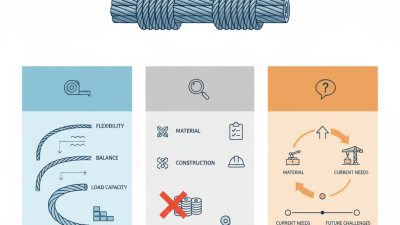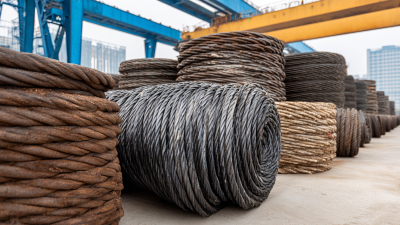
What Is Wire Rope and How Is It Used?

Wire rope looks simple at first glance. It is not.

This engineered assembly combines individual wires, strands, and a central core. Each part carries tension, bends around sheaves, and responds to changing loads. Wire-rope specialist A. H. McClintock offered a useful warning: “Wire rope is a machine.” That short sentence changes how the product should be understood.

A machine needs correct selection, careful installation, and regular attention. Wire rope does too. Its diameter, construction, lay, grade, and core influence strength and flexibility. A crane may require a rope that bends repeatedly over small sheaves. An elevator system may need smooth movement and dependable fatigue resistance. A logging application may demand abrasion resistance against rough surfaces and heavy impacts.

The visible wires tell only part of the story. Broken wires, flattened sections, corrosion, birdcaging, and damaged end connections can signal deeper problems. A rope can appear serviceable while its internal wires have weakened. That is why trained inspection matters.

The best practice is practical, not dramatic. Keep records. Check lubrication. Watch how the rope spools and bends. Replace it when damage exceeds the applicable manufacturer or industry limits. Guesswork has no place near suspended loads.

Even experienced crews can miss small changes. That weakness deserves recognition. Reliable wire rope use depends on disciplined habits, competent judgment, and respect for the working environment. This guide explains what wire rope is, how it is made, where it is used, and how informed users can manage its performance more responsibly.
What Is Wire Rope and How Is It Used?

Definition and Basic Structure of Wire Rope

What Is Wire Rope and How Is It Used?

Definition and Basic Structure of Wire Rope

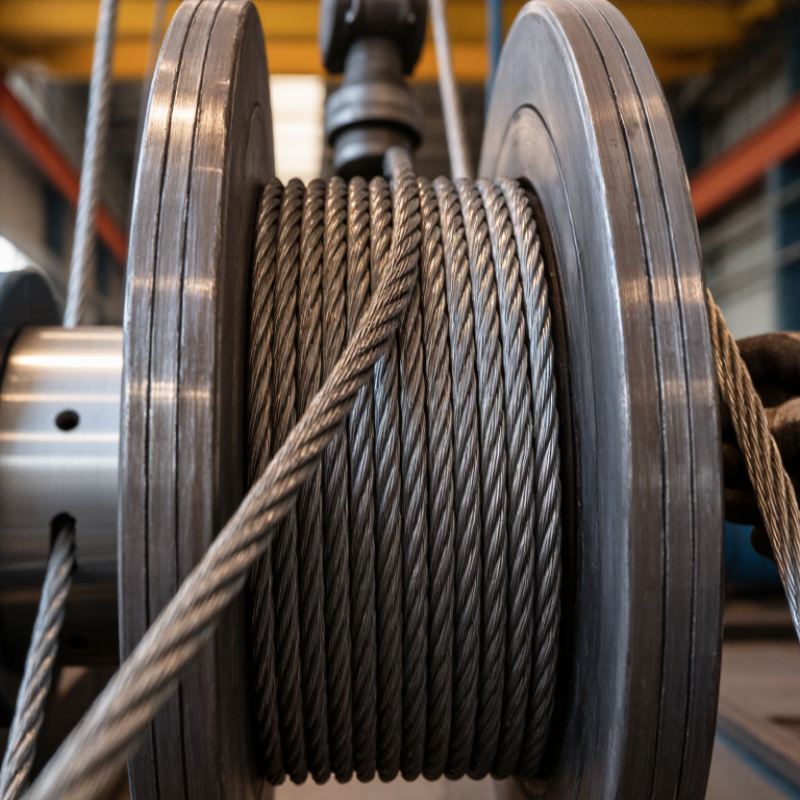
Wire rope is a flexible mechanical assembly made from steel wires. Several wires twist together to form one strand. Multiple strands then wrap around a central core. This layered design creates strength, flexibility, and controlled movement.

A common construction is 6×19. It contains six strands, with approximately 19 wires in each strand. ISO 2408:2017 classifies wire ropes by construction, diameter, grade, and manufacturing requirements. The core may be fiber or steel. Fiber cores improve flexibility, while steel cores support higher temperatures and crushing resistance.

The wires carry tensile force. The strands distribute that force around the rope. The core supports the strands and helps maintain the rope’s shape. Lay direction also matters. Regular lay usually offers better handling and resistance to rotation. Lang lay can provide improved wear resistance, but it needs careful installation.

Wire rope diameter is measured across its widest section. A small measurement error can affect pulley contact and safety margins. The Wire Rope Technical Board advises checking broken wires, corrosion, deformation, and diameter loss during inspections. These details are easy to overlook.

The structure is not flawless. Repeated bending still causes fatigue. Poor lubrication accelerates wear. In practical maintenance, visual checks alone may miss internal damage, especially near end fittings. That is why inspection records, measured data, and the rope’s service history should be reviewed together.

Materials and Manufacturing Process

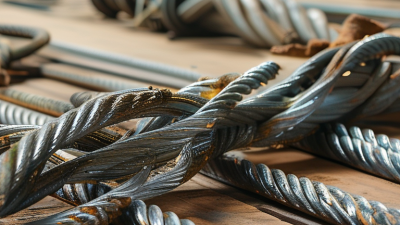
Wire rope is a flexible load-bearing assembly made from steel wires, strands, and a central core. Its material choice affects strength, fatigue life, corrosion resistance, and handling. Carbon steel suits many lifting applications because it balances strength and cost. Stainless steel performs better where moisture or chemicals threaten the surface. However, no material is universally best. A rope can resist rust yet lose flexibility if its design is poorly matched to the equipment.

Manufacturing begins with drawing steel rod through dies to reduce its diameter and improve consistency. The wires are then heat-treated, cleaned, and sometimes coated with zinc or another protective layer. Several wires are helically twisted into strands around a core. Those strands are laid together to form the finished rope. Core type matters. Fiber cores improve flexibility, while steel cores support higher temperatures and crushing resistance. Tension must remain controlled during closing, or uneven strands may carry the load.

In practice, quality depends on more than tensile strength. Technicians check diameter, lay direction, lubrication, broken wires, and surface damage. A small bend over a sharp edge can permanently distort the rope. Visual inspection helps, but it cannot reveal every internal defect. That limitation deserves attention. Selection should consider working load, sheave size, bending cycles, environment, and storage conditions. Inspection records make replacement decisions more reliable.

What Is Wire Rope and How Is It Used?

Wire rope is made by twisting steel wires into strands and then helically laying the strands around a core. The chart shows the approximate mass per metre of a typical steel wire rope as nominal rope diameter increases. The values are calculated using the commonly used approximation of 0.00395 × diameter², with diameter measured in millimetres.

Larger wire ropes contain more steel and therefore weigh more per metre. In practice, the final mass varies with rope construction, core type, lay, coating, and manufacturing tolerances. Wire rope is commonly used for lifting, cranes, elevators, suspension systems, drilling, and material handling.

Types and Configurations of Wire Rope

What Is Wire Rope and How Is It Used?

Types and Configurations of Wire Rope

Wire rope is a flexible machine made from steel wires, strands, and a central core. Its configuration determines strength, flexibility, rotation, and resistance to crushing. Common constructions include 6×19, 6×37, and 8×19. The first number identifies strands; the second shows wires in each strand.

A 6×19 rope offers balanced strength and abrasion resistance. A 6×37 design bends more easily around small sheaves because it uses finer wires. An 8×19 configuration often provides smoother movement in lifting systems. Rotation-resistant ropes use multiple layers with opposing lay directions. They help control twisting, but they demand careful installation and compatible end fittings.

The core also changes performance. Fiber cores improve flexibility and reduce weight. Independent wire rope cores provide greater crush resistance and heat tolerance. Regular lay ropes usually handle better during general lifting. Lang lay ropes offer improved abrasion resistance, but they can untwist under poor handling. A 2024 global market report projects roughly 4% annual growth for wire rope demand through 2028, driven by construction, ports, and energy projects.

Selection should match load, bend radius, speed, temperature, and exposure. ISO 4309:2017 identifies broken wires, corrosion, diameter reduction, and deformation as key inspection concerns. A rope may look clean yet contain internal damage. That is the uncomfortable part. Field experience still matters, and a simple visual check is never enough.

What Is Wire Rope and How Is It Used? — Types and Configurations of Wire Rope

Wire Rope Type Typical Construction Core Configuration Flexibility Rotation Behavior Common Applications Key Characteristics
6 × 7 6 strands with approximately 7 wires per strand Usually fiber core or independent wire-rope core Low to Moderate Can rotate under load Guy lines, messenger lines, bridle assemblies, and applications requiring abrasion resistance Relatively large outer wires provide good resistance to abrasion and crushing, but the rope is less flexible than finer-wire constructions.
6 × 19 6 strands with approximately 19 wires per strand Fiber core, independent wire-rope core, or wire strand core Moderate Can rotate under load General lifting, winches, haulage equipment, and overhead material handling A widely used general-purpose construction that balances strength, flexibility, and abrasion resistance.
6 × 37 6 strands with approximately 37 wires per strand Fiber core or independent wire-rope core High Can rotate under load Running ropes, sheaves with relatively small bending radii, cranes, and derricks More wires produce improved flexibility and bending performance, while the smaller outer wires are generally less abrasion-resistant than those in 6 × 19 rope.
8 × 19 8 strands with approximately 19 wires per strand Fiber core or independent wire-rope core High Lower rotation tendency than many six-strand ropes, but not rotation-resistant Elevators, hoists, cranes, and equipment requiring smooth passage over sheaves The additional strands provide a more rounded rope profile and good flexibility. Application-specific standards must be followed for elevator service.
19 × 7 19 strands arranged around a central strand, with approximately 7 wires per strand Independent wire-rope core or strand core Moderate Rotation-resistant Single-part lifting lines, hoisting systems, and applications where load spinning must be controlled Designed to reduce torque and rotation when loaded. It should not be confused with fully non-rotating rope.
35 × 7 35 strands arranged in multiple layers around a core Independent wire-rope core or specialized strand core High Strongly rotation-resistant High-rise hoists, deep-shaft lifting, tall-crane hoisting, and long free-hanging loads Provides greater torque balance than 19 × 7 constructions and is suited to demanding lifting applications when correctly selected and reeved.
Compacted-Strand Rope Strands are compacted by mechanical or manufacturing processes Fiber core, independent wire-rope core, or compacted strand core Moderate to High Depends on the underlying construction Heavy lifting, cranes, draglines, and applications exposed to high contact pressure Compaction increases metallic area, improves resistance to crushing, and creates a smoother outer surface for contact with sheaves and drums.
Plastic-Impregnated Rope Wire rope with a polymer layer or polymer-filled internal spaces Fiber core or wire-rope core, depending on the design Construction-Dependent Depends on the underlying construction Offshore lifting, marine equipment, mine hoists, and environments requiring improved internal protection The polymer can help retain lubricant, limit internal wire movement, and reduce the entry of water and contaminants. Temperature and chemical compatibility must be checked.
Rotation-Resistant Rope Multiple layers of strands laid in opposing directions Usually a wire-rope core or specially balanced internal construction Moderate to High Low rotation under load Mobile cranes, tower cranes, deep lifting, and long vertical hoists Opposing strand layers counteract torque. Correct reeving, drum design, and handling procedures are essential to prevent damage.
Construction designations such as 6 × 19 describe the approximate number of strands and wires per strand; actual wire counts, grades, cores, lay directions, and performance vary by applicable standard and manufacturer specification. Working-load limits must be determined from the rope’s certified strength, diameter, termination efficiency, reeving arrangement, and required safety factor.

How Wire Rope Is Used in Different Applications

Wire rope is a flexible mechanical cable made from steel wires twisted into strands around a central core. Its design combines strength, movement, and controlled bending. The rope’s diameter, construction, core, and finish affect its performance. In my experience, choosing by breaking strength alone is a common mistake. Working load limits, bending conditions, and safety factors matter just as much.

In construction, wire rope lifts steel beams, concrete forms, and equipment from ground level. Cranes use sheaves and drums to guide the rope through repeated lifting cycles. In elevators, several ropes share the car’s weight while moving smoothly over traction sheaves. Mining systems use heavy-duty rope for hoisting materials through deep shafts. Each application demands careful attention to abrasion, shock loading, and corrosion.

Marine operations use wire rope for mooring, towing, and winching, where saltwater can attack exposed wires. Forestry equipment relies on it to pull logs across uneven terrain. Suspension systems and cable barriers also use wire rope when tension must remain stable. Inspectors look for broken wires, crushed sections, birdcaging, rust, and unusual diameter loss. Small defects matter. Maintenance records should include inspection dates, operating conditions, and replacement decisions. Yet inspections are not flawless; dirt can hide damage, and inexperienced observers may miss early warning signs. A second qualified review can prevent a costly error.

Inspection, Maintenance, and Replacement Guidelines

What Is Wire Rope and How Is It Used?

Inspection, Maintenance, and Replacement Guidelines

Wire rope consists of steel wires twisted into strands around a central core. It supports cranes, elevators, winches, and lifting equipment. Its strength depends on correct installation, loading, and regular inspection. A clean rope can still be unsafe.

Inspect the rope before each shift and after unusual loading. Look for broken wires, flattened sections, kinks, birdcaging, corrosion, and damaged end fittings. Measure the rope diameter at several points. A noticeable reduction may indicate internal wear. Check sheaves and drums too, because poor alignment can damage an otherwise serviceable rope. Keep inspection records with dates, findings, and corrective actions. Details are easy to forget.

Tips: Wipe away dirt before inspection, but do not use methods that hide cracks or corrosion. Apply a suitable lubricant when required, following the rope’s operating conditions. Avoid overloading, sudden shock loads, and tight bends. If damage appears near a termination, inspect the fitting carefully. Remove the rope from service when it exceeds applicable discard criteria, shows severe distortion, or has uncertain history. Replacement should match the required construction, diameter, strength, core, and end connection. A qualified person should approve the decision. Hesitation is a warning sign.