Choosing the right hoist ring in 2026 will require more than comparing working load limits. Buyers must examine thread engagement, swivel range, material grade, fatigue resistance, and installation torque. Small details matter. A misaligned ring can shift the load path before the lift begins.
The global crane market reached approximately USD 47.19 billion in 2023, according to Fortune Business Insights’ 2024 Crane Market report. Its projected growth reflects wider investment in factories, ports, construction, and maintenance operations. However, crane growth does not automatically prove hoist ring demand. The product-specific data remains fragmented, and that limitation deserves attention. MarketsandMarkets also identifies safety, digital monitoring, and higher lifting efficiency as major trends across industrial lifting equipment. These trends are influencing how buyers evaluate lifting points.
Lifting engineer David Duerr offers a practical reminder: “A rated capacity is not a permission to ignore the load path.” That principle should guide every hoist ring comparison. A bolt-on ring may suit a fixed lifting position. A swivel ring may better manage changing angles. A weld-on design may reduce installation constraints, but welding quality becomes critical.
This guide compares the leading hoist ring types for 2026 buyers. It considers design, application, inspection, and total ownership risk. Ratings look impressive. Real conditions are less tidy. Temperature, shock loading, damaged threads, and poor torque control can change the result. The best choice is therefore not always the strongest-looking product. It is the ring that matches the load, equipment, and documented lifting procedure.
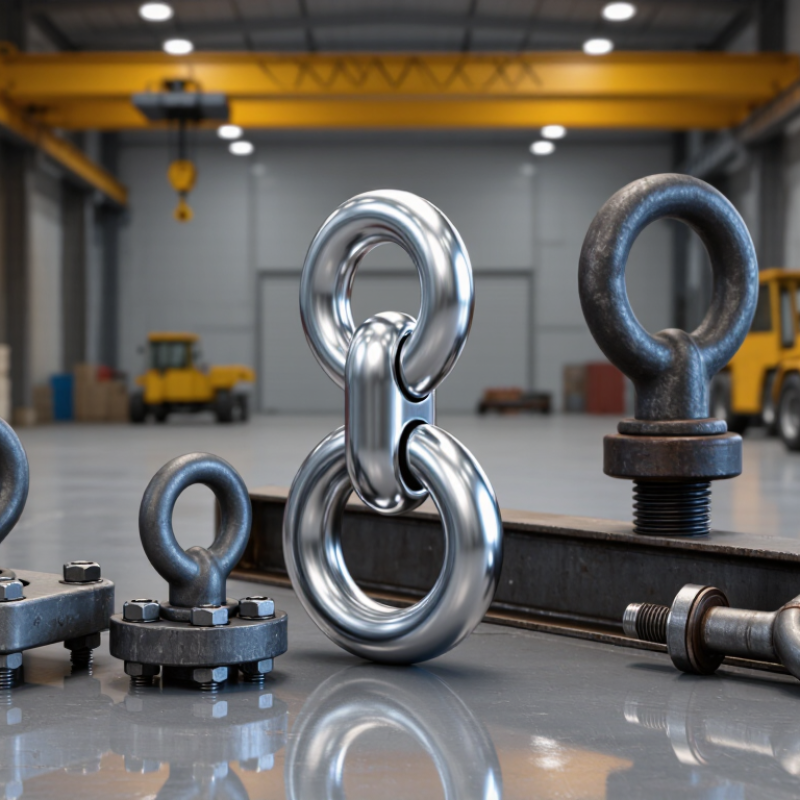
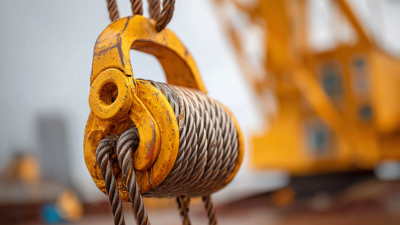
For 2026 buyers, the main choices include fixed hoist rings, swivel hoist rings, and side-pull designs. Fixed rings suit vertical lifting with predictable loading. Swivel rings allow better alignment when the load shifts during handling. Side-pull models support angled lifting, but only within their stated working limits. A hoist ring’s Working Load Limit, or WLL, is not a universal strength value. It applies to specific loading directions, angles, installation conditions, and hardware combinations. Always treat the lowest-rated component as the system limit.
ASME B30.26 provides safety guidance for rigging hardware, including identification, inspection, use, and removal from service. Buyers should look for clear WLL markings and traceable product information. The mounting hole must provide sufficient thread engagement and match the required fastener grade. Correct tightening torque matters. So does the base material. A strong ring installed in weak or damaged threads remains unsafe.
Inspect for cracks, bent parts, severe wear, corrosion, and missing markings. Shock loading is another common mistake. It can exceed the rated load without warning. Real work areas are rarely perfect.
Tips: Confirm the lifting angle before selecting the ring. Follow the supplied torque instructions. Record inspections. Stop using questionable hardware. A spreadsheet helps, but it cannot replace a close visual check. When the load path seems unclear, ask a qualified lifting professional to review the setup before use.
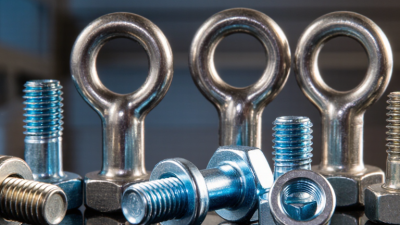
What Are the Top Hoist Ring Types for 2026 Buyers?
Fixed and swivel hoist rings serve different lifting geometries. Fixed rings stay aligned with their mounting position, making them suitable for predictable, vertical pulls. Swivel rings can rotate 360° and often pivot through a 180° range, depending on design. That movement helps the ring follow a changing load path instead of forcing the bolt sideways.
Picture a mold being lifted from a machine bed. A fixed ring may resist the sling as the load turns. A swivel ring can rotate with the sling, reducing twisting at the connection. However, rotation does not automatically permit every side load. Buyers must check the manufacturer’s rated direction, proof-test details, thread engagement, and required tightening torque. Small installation errors matter.
A 2024 material-handling equipment market report from Grand View Research estimated the global market at more than USD 200 billion, with continued growth projected through 2030. That figure reflects broad equipment demand, not hoist-ring safety or performance. It is useful context, but not a substitute for component testing. ASME B30.26 emphasizes proper inspection and rated-use practices for below-the-hook hardware, while OSHA guidance reinforces attention to capacity, rigging condition, and load control. In practice, swivel rings usually offer greater flexibility, yet fixed rings may be simpler and less expensive for stable vertical lifts. The imperfect choice is often the rushed choice.
| Buying Dimension | Fixed Hoist Rings | Swivel Hoist Rings |
|---|---|---|
| Primary Movement | Rigid lifting point with no designed rotational movement around the mounting axis. | Designed to rotate around the mounting axis and pivot under load, depending on the product design. |
| Rotation Range | 0° rotational movement | Up to 360° rotation |
| Pivot Range | Normally fixed in one plane; any movement is limited to mounting clearance and should not be treated as a working pivot range. | Commonly up to 180° pivoting, subject to the ring design and rated loading direction. |
| Best Application | Vertical lifting where the load direction remains aligned with the mounting point. | Multi-directional lifting, tilting, turning, and applications where the sling angle changes during handling. |
| Load Direction | Most suitable for a clearly defined axial or vertical load path. | Suitable for changing load directions only when the manufacturer’s rated working load limit covers those directions. |
| Load Capacity | Varies by thread size, material, geometry, mounting arrangement, and certified working load limit. | Varies by thread size, material, geometry, rotation or pivot angle, and certified working load limit. |
| Load-Angle Consideration | Side loading can create bending forces and may exceed the permitted rating. | Angular capacity must be checked carefully; the rated capacity may change at different sling angles or pivot positions. |
| Mounting Requirement | Requires a correctly sized, properly aligned tapped hole or approved mounting structure. | Requires a correctly sized tapped hole or mounting structure that can withstand the ring’s rated forces in all intended directions. |
| Fastener Engagement | Full thread engagement and correct bolt or stud seating are essential for the rated capacity. | Full thread engagement and correct seating are essential; the ring must be free to move without contacting nearby structures. |
| Installation Position | Usually installed so the lifting force is directly in line with the fixed eye. | Should be positioned so the ring can align naturally with the direction of pull before lifting begins. |
| Operational Advantage | Simple construction, straightforward inspection, and economical choice for consistent vertical lifting. | Improved alignment with changing sling directions and reduced risk of the lifting connector being forced against a fixed eye. |
| Potential Limitation | Not ideal for lifting paths that require rotation, tilting, or significant off-axis loading. | Generally more complex and may require closer inspection of moving parts, lubrication requirements, and wear areas. |
| Inspection Points | Check the eye, threads, seating surface, deformation, cracks, corrosion, and identification markings. | Check the eye, threads, retaining components, rotation and pivot action, deformation, cracks, corrosion, and identification markings. |
| Movement Check Before Use | Confirm that the ring and mounting point are secure and that no unintended movement is present. | Confirm smooth rotation and pivoting without binding, excessive play, or contact with adjacent components. |
| Standards and Documentation | Use only products supplied with traceable identification, working load limit information, installation instructions, and applicable conformity documentation. | Use only products supplied with traceable identification, angle-specific capacity information, installation instructions, and applicable conformity documentation. |
| Recommended Buyer Choice | Choose when the load is lifted vertically and the direction of force remains predictable. | Choose when the load direction changes or when 360° rotation and approximately 180° pivot capability are required by the lifting method. |
| Critical Safety Reminder | Never select a hoist ring by thread size alone. Verify the working load limit, load angle, mounting strength, installation torque, inspection requirements, and the applicable lifting-equipment regulations before use. | |
Top hoist ring choices for 2026 buyers will depend heavily on material performance. Material grade deserves careful attention.
Forged alloy steel remains a practical choice for repeated lifting and dynamic loading. It offers high tensile strength, toughness, and resistance to sudden shock. Common grades may perform differently after heat treatment, so the grade alone is not enough.
Check the manufacturer’s test documentation, hardness range, and marked working load limit. ISO 898-1 helps buyers understand mechanical properties for many steel fasteners. However, it does not replace lifting-specific design, testing, or inspection requirements. That distinction matters.
Corrosion resistance becomes critical near ports, chemical plants, and outdoor storage areas. Zinc plating or protective coating can slow surface corrosion, but scratches expose bare steel quickly. Stainless steel may resist rust better, yet it can have different fatigue and strength characteristics. Do not select it automatically.
On a coastal site, inspect threads, the swivel joint, and bearing surfaces after cleaning. Salt deposits often hide early pitting. A ring can look sound and still lose capacity.
Load direction matters too; side loading can create dangerous stress even when the rated capacity seems adequate.
I would also question any product with unclear markings or missing inspection records. That shortcut is tempting, and sometimes wrong.
What Are the Top Hoist Ring Types for 2026 Buyers?
For 2026 buyers, fixed hoist rings suit straight vertical lifts, while swivel rings handle changing sling directions. Side-pull designs may support angled loading, but only within their tested range. Capacity is not a simple number printed on the ring. It depends on the lifting angle, bolt condition, attachment material, and load balance.
A vertical lift usually gives the highest rated capacity. As the sling angle becomes more horizontal, tension rises quickly. At a 30-degree sling angle, each attachment point can experience much greater force than expected. Never estimate this by eye. Use the manufacturer’s angle chart and include shock, vibration, and uneven loading. Small mistakes become expensive.
Bolt torque matters just as much. Clean threads, full thread engagement, and proper seating help the ring transfer force safely. Lubrication can change the clamping force, so follow the specified torque method. A torque wrench is better than guessing with a long handle. It sounds basic.
A 5:1 safety factor means the minimum breaking strength is five times the rated working load. It does not make an overloaded lift acceptable. Inspect for bent bodies, damaged threads, cracks, and missing markings before each use. I have seen calculations look correct while the base material was too thin. That detail deserves more attention. If the load path is uncertain, stop and obtain competent engineering review.
Capacity Selection: Load Angles, Bolt Torque, and 5:1 Safety Factors
The chart uses the engineering relationship T = W ÷ [2 × cos(θ ÷ 2)] for a symmetrical two-leg sling, where θ is the included angle between the sling legs. As the angle increases, the tension carried by each leg rises sharply. At a 120° included angle, each leg carries approximately the full load.
Apply a minimum 5:1 safety factor when comparing minimum breaking load with working load limit: a 1,000 kg working load limit requires at least 5,000 kg of minimum breaking load under this criterion. Bolt torque is not universal; it depends on bolt diameter, grade, lubrication, thread condition, and the hoist-ring design. Always use the torque value supplied for the specific assembly, and verify the base material, thread engagement, and edge distance.
For 2026 buyers, swivel hoist rings suit changing load directions, while fixed rings fit controlled vertical lifts. Side-load capability must never be assumed. The supplier’s marking should show working load limit, thread size, material, batch code, and inspection status. That detail matters.
During receiving inspection, compare every marking with the drawing and purchase record. Traceability should connect the individual ring to material certificates, heat numbers, and manufacturing inspections.
ISO/IEC 17025 accreditation adds value because it confirms laboratory competence, impartiality, and controlled testing methods. Ask for the accreditation scope, not only a certificate copy. A scope may exclude tensile or fatigue testing.
ASME B30.26 provides recognized guidance for rigging hardware, including marking, inspection, and rated capacity practices. The International Labour Organization estimated 2.93 million work-related deaths annually in its 2023 report, showing why small verification gaps deserve attention. The ISO Survey 2023 reported more than 1.2 million ISO 9001 certificates worldwide, but certification alone does not prove a hoist ring’s capacity. I would also check test dates, specimen identification, calibration status, and reviewer signatures. A neat report can still contain a mismatched batch number. That is easy to miss. Conservative buyers photograph the ring, packaging, and records before installation, then retain those files with the lifting plan.