


China Top Spinning Filter Manufacturers for Global Buyers explores how experienced suppliers support modern polymer and textile production. A Spinning Filter can influence pressure stability, melt cleanliness, fiber uniformity, and production continuity. These effects appear on the factory floor, not only in technical brochures. A blocked screen pack may raise pressure within minutes. A poorly matched filter may create visible fiber defects, material waste, and repeated shutdowns.
Filtration specialist Dr. Barry A. Perlmutter offers a practical principle: “The right filter is selected from process knowledge, not catalog claims.” This idea guides the discussion. Reliable Chinese manufacturers should explain filtration ratings, filter media, screen construction, operating temperature, pressure limits, and replacement procedures. They should also provide drawings, inspection records, material certificates, and evidence from comparable spinning lines. A serious buyer needs more than a low quotation.
This guide reviews manufacturers through an international buyer’s perspective. It considers production capability, customization, quality control, communication, export experience, and after-sales support. Factory audits and sample trials remain valuable. They reveal details that websites often hide, including weld consistency, frame flatness, packaging strength, and response speed. That sounds simple. It is not.
Some supplier information may change over time. Buyers should verify current certifications, testing methods, delivery terms, and technical claims directly. No ranking can replace process-specific evaluation. The best Spinning Filter supplier is not always the largest one. It is the partner that understands your polymer, throughput, temperature, pressure, and maintenance reality. Small details matter.
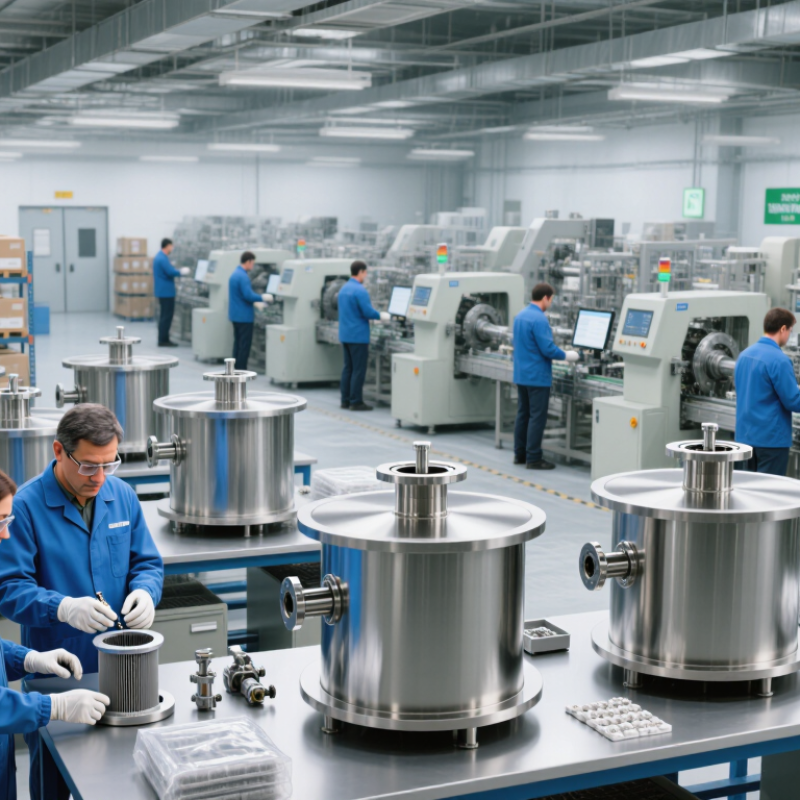
A spinning filter is a precision filtration unit used before molten polymer reaches the spinneret. It captures gels, carbonized particles, and fine metal debris. The filter usually contains layered stainless-steel screens inside a heated housing. Stable flow is essential. Even a small blockage can raise pressure and create uneven filaments.
Manufacturer selection matters because filter performance depends on more than mesh size. Experienced suppliers evaluate polymer type, operating temperature, pressure range, throughput, and required filtration accuracy. They should provide clear drawings, material records, inspection data, and practical installation guidance. A reliable manufacturer also checks sealing surfaces and screen tension. Small defects can become expensive production problems.
Look beyond the catalog.
Global buyers should request sample testing under realistic conditions. Ask how the supplier handles pressure-rise data, replacement parts, and technical communication across time zones. Traceable quality systems and documented inspections improve confidence, but paperwork alone is not enough. A polished certificate cannot compensate for weak process knowledge. The cheapest filter may also create higher energy use and frequent stoppages. Still, no selection method is perfect. Polymer behavior can change with recycled content, temperature, or production speed, so specifications should be reviewed after trial runs and actual operating feedback.
A spinning filter is a precision filtration component used in polymer melt spinning. It removes gels, unmelted particles, contaminants, and agglomerates from the molten polymer before the material reaches the spinneret. The following table provides a practical, manufacturer-neutral framework for global buyers evaluating spinning filter suppliers in China.
| Evaluation Dimension | Typical Technical Information | Why It Matters to Global Buyers | Recommended Verification Evidence |
|---|---|---|---|
| Product Function | Filtration of molten polymers before extrusion through a spinneret; commonly used in POY, FDY, DTY, staple fiber, monofilament, and industrial yarn lines. | The filter must be designed for high-temperature polymer melt service rather than for ordinary water, oil, or air filtration. | Application drawings, process description, polymer type, throughput, and installation position. |
| Compatible Polymer | Common materials include PET, PA6, PA66, PP, PLA, PBT, and other thermoplastic polymers used in melt spinning. | Different polymers have different melt temperatures, viscosities, chemical behavior, and sensitivity to residence time. | Material compatibility statement and recommended operating window for the selected polymer. |
| Filtration Rating | Fine polymer melt filtration commonly uses nominal or absolute ratings in the approximate 5–40 μm range, depending on polymer quality and yarn specification. | A finer rating can improve contaminant removal but may increase pressure drop, cleaning frequency, and operating cost. | Written definition of nominal or absolute rating, test method, and particle-retention data. |
| Filter Media | Typical media include stainless-steel wire mesh, sintered metal fiber, sintered powder metal, and layered composite media. | Media structure affects dirt-holding capacity, pressure stability, mechanical strength, cleanability, and service life. | Material grade, pore structure, layer configuration, microscopic inspection, and material certificates. |
| Construction Type | Common formats include candle filters, disc filters, candle assemblies, filter packs, and customized elements for continuous or batch systems. | The geometry must match the filter housing, sealing method, flow direction, screen area, and replacement procedure. | Dimensioned drawings, 3D files, sealing details, tolerance data, and sample-fit confirmation. |
| Operating Temperature | Many thermoplastic spinning processes operate approximately between 200°C and 320°C; actual temperature depends on polymer grade and process design. | Insufficient temperature capability can cause deformation, oxidation, leakage, or premature media failure. | Maximum continuous temperature, short-term temperature limit, thermal-cycle test results, and seal-material information. |
| Pressure Capability | Polymer melt filtration systems can experience high operating and differential pressures; the allowable value must be specified for the complete filter assembly. | Pressure resistance protects against media collapse, bypass, housing damage, and unplanned line shutdowns. | Burst-pressure or proof-pressure data, differential-pressure limit, and test conditions at operating temperature. |
| Pressure Drop | Pressure drop depends on polymer viscosity, temperature, throughput, filter area, media permeability, and contamination loading. | Lower and more stable pressure drop supports consistent spinning pressure and helps maintain yarn quality. | Pressure-drop curves using the buyer’s polymer, temperature, flow rate, and target filtration rating. |
| Flow Capacity | Capacity is determined by effective filtration area and process conditions rather than by filter dimensions alone. | Correct sizing reduces excessive pressure rise and prevents insufficient residence-time control. | Flow-rate calculations, effective area, melt-viscosity assumptions, and pilot or production trial data. |
| Cleanability and Reuse | Metal filter elements may be reusable when the construction and contamination type allow cleaning by approved thermal, chemical, ultrasonic, or mechanical methods. | Reusable elements can reduce consumable cost, but improper cleaning may damage pore structure or leave polymer residue. | Validated cleaning procedure, maximum cleaning cycles, inspection criteria, and post-cleaning performance report. |
| Dimensional Accuracy | Important dimensions include outside diameter, inside diameter, length, flange or sealing geometry, screen area, and concentricity. | Accurate dimensions prevent bypass leakage, installation problems, uneven flow, and damage to downstream equipment. | Inspection report, calibrated measuring equipment, tolerance table, and first-article approval sample. |
| Manufacturing Traceability | A reliable production system should identify raw materials, production batches, inspection records, and shipment details. | Traceability supports root-cause analysis, repeat ordering, quality claims, and regulatory documentation. | Batch number, material certificate, inspection record, certificate of conformity, and documented change-control process. |
| Quality Management | A documented quality management system, such as ISO 9001 certification, can support controlled procedures and consistent inspection. | A certificate alone does not prove filtration performance, so process-specific testing remains necessary. | Valid certificate scope, audit records, control plan, nonconformance procedure, and product-specific test results. |
| Export and Technical Support | Global supply capability should include export packaging, clear English documentation, spare-part identification, and technical communication across time zones. | Effective support reduces commissioning delays and helps resolve installation or process problems quickly. | Packing specification, commercial invoice and documentation process, response-time commitment, installation guide, and after-sales procedure. |
| Total Cost of Ownership | Total cost includes purchase price, freight, replacement frequency, cleaning cost, downtime, energy consumption, and product-quality losses. | The lowest unit price may not provide the lowest operating cost if service life or pressure stability is poor. | Lifecycle-cost calculation based on actual throughput, operating hours, replacement intervals, and production-loss assumptions. |