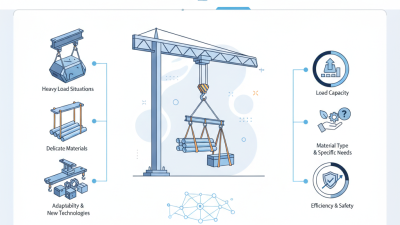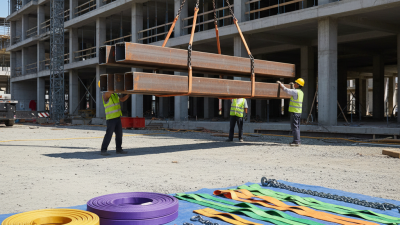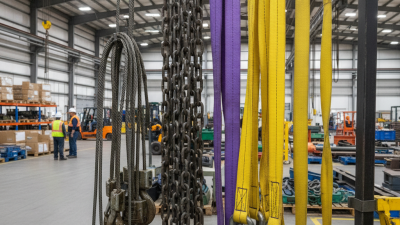
Buying a lifting beam for international operations is not a simple catalogue decision. It affects load control, worker safety, project timing, and equipment investment. A beam may look robust in photos, yet its rated capacity depends on design, materials, weld quality, lifting points, and use conditions. Global buyers must connect technical evidence with the real worksite. This guide introduces ten practical buying tips for selecting a dependable lifting beam. It focuses on decisions that prevent costly surprises, not merely lower prices. Still, no checklist is perfect. Site information is often incomplete, and assumptions can quietly shape the purchase.
Experienced engineers typically start with load weight, center of gravity, lift geometry, headroom, and sling angles. These details determine whether a lifting beam is suitable. Ask suppliers for drawings, load charts, inspection records, material information, and clear marking requirements. Independent review may be valuable for complex or high-consequence lifts. Confirm applicable standards and local requirements with qualified professionals before approval. A supplier’s confident email is not a substitute for traceable documentation. Good advice can still fail when operators receive poor training or ignore environmental limits.
International purchasing adds more variables. Buyers should examine corrosion protection, spare parts, packaging, delivery terms, installation support, and after-sales response. Clarify whether the quoted capacity covers the complete assembly or only the beam. Check dimensions against cranes, containers, storage areas, and access routes. A small mismatch can stop a project. The following ten tips help compare suppliers consistently, ask sharper questions, and document acceptance criteria. They do not replace engineering judgment. They make that judgment easier to apply with evidence.
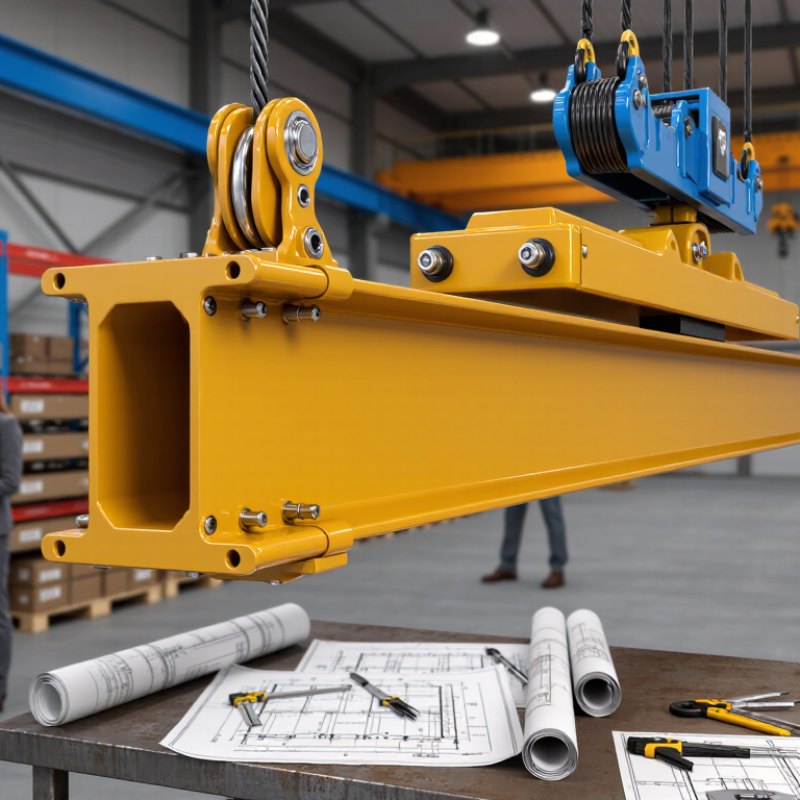
Before comparing lifting beams, define the real load, not only the product weight. Include the object, spreader beam, shackles, slings, hooks, and any temporary attachments. The first estimate is rarely perfect. Recheck it.
The International Labour Organization estimated 2.93 million work-related deaths and 395 million non-fatal injuries worldwide in 2023. That figure is not specific to lifting beams, but it shows why load planning deserves engineering attention. Select a beam with a working load limit above the calculated suspended mass. Then verify the crane hook capacity, lifting points, beam deflection, and center of gravity. An uneven center of gravity can tilt the beam within seconds. Small angle changes also increase sling tension. At a 30-degree sling angle from horizontal, each sling carries about twice its vertical share.
Define the lifting conditions in writing. Record the load length, width, height, weight distribution, headroom, travel path, wind exposure, temperature, and corrosion risk. ASME B30.20 and EN 13155 provide recognized guidance for below-the-hook lifting devices, including marking, inspection, and design considerations. Do not rely on a catalog rating alone. The rating may assume ideal loading. Real cargo may flex, snag, or shift. Specify adjustable lifting points only when their locking method is clear and inspectable. Require visible identification, current inspection records, and a documented proof-test arrangement where applicable. A cautious purchase can still be imperfect if site conditions change. Review the plan before every unusual lift.

Selecting a lifting beam starts with the load, not the catalogue image. A spreader beam suits loads needing controlled sling angles and wider support. A lifting beam usually handles concentrated lifting points with a shorter working span. Confirm the working load limit, load centre, and lifting method before comparing prices. Include the load’s weight, shape, centre of gravity, and any sudden movement during handling. Small errors matter.
Dimensions affect both safety and usability. Check the clear span, overall length, beam depth, hook height, and connection-hole spacing. The beam must fit beneath the crane hook while leaving enough headroom for slings and shackles. Adjustable lifting points can improve flexibility, but they may increase weight and inspection needs. Fixed points are simpler when loads remain consistent. Measure the actual load, not an estimated drawing.
Ask for rated drawings, material details, weld procedures, test records, and inspection instructions. Confirm whether the stated capacity applies evenly across all lifting points. It may not. Consider corrosion protection for outdoor storage, especially near saltwater or chemical exposure. Transport dimensions also matter for international delivery and site access. One mistake worth admitting is trusting a familiar size without checking the load’s balance. A beam that looks strong can still deflect, twist, or overload one attachment point. Have a qualified lifting professional review the final configuration.
Verify the steel grade, heat number, weld procedure, and mill certificate before approving a lifting beam. Ask for traceability from raw plate to final inspection. A certificate without matching batch numbers is weak evidence. Check whether the design follows ASME BTH-1, EN 13155, or an equivalent local standard. These standards address design, testing, and lifting-device safety, but they are not interchangeable automatically.
Confirm the working load limit for every lifting point, not only the beam’s headline capacity. Review the stated safety factor, load distribution, deflection limit, and dynamic loading assumptions. A beam rated for 10 tonnes may fail under an uneven four-point lift. Request finite element results, weld inspection records, and proof-load testing documentation. Visual inspection alone misses internal flaws. Consider independent inspection when drawings are unclear or revisions are incomplete.
The U.S. Bureau of Labor Statistics recorded 5,283 fatal work injuries in 2023, including 1,069 in construction. Lifting decisions deserve disciplined verification. Require permanent markings, serial numbers, inspection intervals, and clear operating instructions. Check the certification body’s accreditation, scope, and report validity. ISO 9001 supports process control, but it does not prove structural capacity. That distinction is often overlooked. Suppliers may also provide polished documents with missing assumptions. Pause there. Confirm the engineering basis before placing the order.
When buying a lifting beam, check the complete load path, not only the beam’s rated capacity. The U.S. Bureau of Labor Statistics recorded 1,069 fatal work injuries in transportation and material moving occupations in 2023. Compatibility decisions deserve careful attention.
Confirm the crane hook can accept the beam’s top connection without side loading. Check the beam’s WLL against the lifted load, rigging weight, impact factors, and center of gravity. A beam may be rated for 10 tonnes, yet the crane, shackles, or slings may have lower limits. The weakest component controls. It is basic, but often missed.
Sling angles require special care. For two equal slings, tension increases as the angle becomes flatter. At 30 degrees from horizontal, each sling carries approximately the load’s full weight. At 60 degrees, each carries about 58 percent.
Use certified shackles with suitable pin diameter, bow clearance, and WLL. Avoid side loading unless the manufacturer’s engineering data allows it. ASME B30.9 covers slings, while ASME B30.20 addresses below-the-hook lifting devices. Check equivalent regional requirements, such as EN 13155, when applicable.
Ask for drawings, material certificates, inspection records, and proof-test evidence. A spreadsheet can still mislead if the load’s real center of gravity is unknown. Measure it. Recheck it. During a site review, I would also question whether the chosen lifting points can withstand local bending, because a perfect beam calculation cannot repair weak attachment plates.
When comparing lifting beam suppliers, inspect more than the quoted unit price. Ask for working load limit data, material certificates, weld inspection records, and proof-test documentation. A reliable supplier should explain how beam weight, span, lifting points, and load distribution were calculated. Request drawings with tolerances, connection details, and surface-treatment specifications. Small omissions can create large installation problems.
Customization may include adjustable lifting points, special beam lengths, low-headroom designs, or corrosion-resistant coatings. Share the actual crane hook dimensions and site restrictions early. A practical supplier should review these details, not simply copy a sketch. Compare engineering fees, prototype charges, tooling costs, and revision limits. I once saw a cheaper design become expensive after two drawing changes. That was avoidable, but not obvious at the beginning.
Pricing should show fabrication, testing, packaging, documentation, and delivery separately. Check whether replacement pins, shackles, and identification plates are available. After-sales support matters when a beam arrives with damaged paint or unclear markings. Ask about warranty duration, inspection guidance, response times, and remote technical assistance. A useful service team can provide photographs, revised manuals, and practical troubleshooting steps. Do not accept vague promises. Put service responsibilities in the purchase agreement. Lead times also deserve scrutiny, especially when customized steelwork requires extra inspection or export packaging. When every supplier uses a different scope, comparison becomes imperfect. Recheck the assumptions before approving the order.
| No. | Buying Dimension | What to Verify Before Ordering | Supplier Comparison Criteria | Typical Customization Options | Indicative Price Range* | After-Sales Support |
|---|---|---|---|---|---|---|
| 1 | Rated Capacity and Load Distribution | Confirm the required working load limit, load center, number of lifting points, sling angle, and whether the beam will handle balanced or unbalanced loads. | Compare suppliers using the same rated capacity, span, lifting-point arrangement, design factor, and proof-test requirements. | Capacity commonly specified from approximately 1 to 100 tonnes; span, lifting lugs, pad eyes, and adjustable pick points can be engineered to suit the load. | 1–5 t: approximately US$1,500–5,000 10–25 t: approximately US$5,000–18,000 |
Request load-rating documentation, inspection instructions, and replacement-part availability. |
| 2 | Applicable Design Standards | Identify the regulations applicable in the destination and operating country. Common references include ASME B30.20, EN 13155, and local lifting-equipment rules. | Check whether the supplier can provide design calculations, material certificates, weld procedures, welder qualifications, and a compliance declaration. | Documentation packages can be tailored for port, construction, offshore, manufacturing, or general industrial applications. | Compliance documentation and engineering review may add approximately 5%–15% to the base price. | Look for support with regulatory documents, periodic inspection requirements, and certification renewals. |
| 3 | Beam Type and Structural Configuration | Choose between a spreader beam, lifting beam, adjustable beam, modular beam, or telescopic design according to load geometry and lifting method. | Compare self-weight, allowable span, deflection, lifting-point flexibility, transport dimensions, and ease of rigging. | Options include fixed or adjustable pick points, telescopic sections, modular bolted sections, and single- or multi-point lifting arrangements. | Fixed designs are generally lower cost; adjustable or telescopic designs often cost approximately 20%–60% more. | Confirm assembly instructions, configuration limits, and technical assistance for changing pick-point positions. |
| 4 | Material and Corrosion Protection | Verify the steel grade, minimum yield strength, weld quality, coating system, service temperature, and exposure to saltwater, chemicals, or outdoor conditions. | Compare material traceability, coating thickness, surface preparation, corrosion warranty, and suitability for the intended environment. | Typical finishes include painted carbon steel, zinc-rich primer systems, hot-dip galvanizing, and corrosion-resistant materials for specialized environments. | Protective coating upgrades commonly add approximately 5%–20%; stainless or specialty materials cost substantially more. | Ask for coating repair procedures, touch-up materials, corrosion inspection guidance, and warranty terms. |
| 5 | Dimensions, Clearance, and Load Geometry | Measure the load length, width, height, lifting lugs, overhead clearance, hook height, and available storage or transport space. | Compare the beam's overall length, headroom requirement, usable lifting width, folded or disassembled dimensions, and total tare weight. | Beam length, lifting-point spacing, hook assemblies, shackles, end stops, and clearance height can be designed around the load. | Non-standard dimensions may add approximately 10%–30%, depending on engineering and fabrication complexity. | Require dimensional drawings, installation guidance, and confirmation that the final design fits the existing crane system. |
| 6 | Safety Factors and Testing | Confirm the design factor, allowable deflection, weld inspection method, proof-load procedure, and whether the beam requires a documented test before shipment. | Compare proof-test loads, non-destructive testing scope, inspection records, serial-number traceability, and nameplate information. | Testing can be arranged for the complete assembly, lifting lugs, welds, or specific configurations used by the buyer. | Proof loading and additional non-destructive testing commonly add approximately US$300–2,000, depending on capacity and location. | Obtain a test certificate, inspection checklist, safe-use instructions, and recommended inspection intervals. |
| 7 | Supplier Manufacturing Capability | Evaluate engineering resources, fabrication capacity, quality-control procedures, weld inspection capability, and experience with similar load ratings. | Use comparable technical specifications and request sample drawings, anonymized project references, production lead time, and quality records. | Ask whether the supplier can support new calculations, design revisions, prototype testing, and repeat production of identical units. | For standard designs, manufacturing lead time is often about 4–8 weeks; custom projects may require 8–16 weeks. | Clarify the responsible technical contact, response time, spare-part process, and escalation procedure. |
| 8 | Total Landed Cost and Logistics | Calculate equipment price, packaging, inland transport, ocean or air freight, insurance, duties, taxes, customs clearance, and unloading requirements. | Compare quotations on the same Incoterms rule, currency, validity period, packaging standard, delivery location, and included documents. | Export packing, lifting points for unloading, container-friendly modular construction, and corrosion-protection packaging may be specified. | Freight, duties, and local charges can add approximately 10%–35% to the quoted equipment price, depending on route and destination. | Confirm shipment tracking, export documents, packing lists, customs support, and responsibility for transit damage claims. |
| 9 | Customization and Compatibility | Provide the crane hook dimensions, shackle sizes, sling types, load attachment points, lifting height, and required operating environment. | Compare the supplier's ability to integrate compatible shackles, hooks, swivel devices, lifting eyes, softeners, and optional load-monitoring equipment. | Common options include custom lug holes, removable shackles, swivel hooks, load cells, identification plates, paint colors, and bilingual markings. | Minor modifications may add 5%–15%; engineered accessories and load-monitoring systems may add US$500–5,000 or more. | Ensure the supplier provides revised drawings and confirms that accessories do not reduce the rated capacity. |
| 10 | Warranty, Training, and After-Sales Service | Review warranty duration, exclusions, commissioning requirements, user training, inspection support, and procedures for reporting defects. | Compare warranty coverage for structure, welds, coatings, purchased components, replacement parts, and service response time. | Support may include operator training, spare shackles, inspection gauges, manuals in multiple languages, and periodic service contracts. | A structural warranty of 12 months is common; extended coverage and service contracts may add approximately 3%–10%. | Prioritize documented response times, remote troubleshooting, local service availability, spare parts, and repair guidance. |