
Demand for reliable optical sorting is rising as recycling and food processors seek cleaner outputs, lower waste, and measurable efficiency. The United Nations Environment Programme’s Food Waste Index Report 2024 estimates that 1.05 billion tonnes of food were wasted in 2022. That figure makes accurate separation more than a technical upgrade. It becomes an operational priority.
A Green Machine Optical Sorter can combine cameras, near-infrared sensors, air jets, and software to identify materials moving across a fast conveyor. In a glass recovery line, the system may separate ceramics, stones, and colored fragments within seconds. In a food facility, it can detect discoloration, foreign material, or inconsistent product appearance. Performance still depends on lighting, belt speed, feed preparation, and maintenance quality.
Industry reports provide useful context. The OECD’s Global Plastics Outlook reported 353 million tonnes of plastic waste generated worldwide in 2019. The International Solid Waste Association has also emphasized better sorting and higher-quality secondary materials. These findings support continued investment in dependable sorting infrastructure, but published specifications should not replace site testing.
This guide examines leading Green Machine Optical Sorter manufacturers through practical criteria. These include detection accuracy, throughput, energy use, software flexibility, installation support, and total ownership cost. Manufacturer claims require careful checking. No ranking is perfect. Real results can change with dust, moisture, contamination, and operator training. Buyers should request test samples, service records, and independently verifiable performance data before selecting equipment.
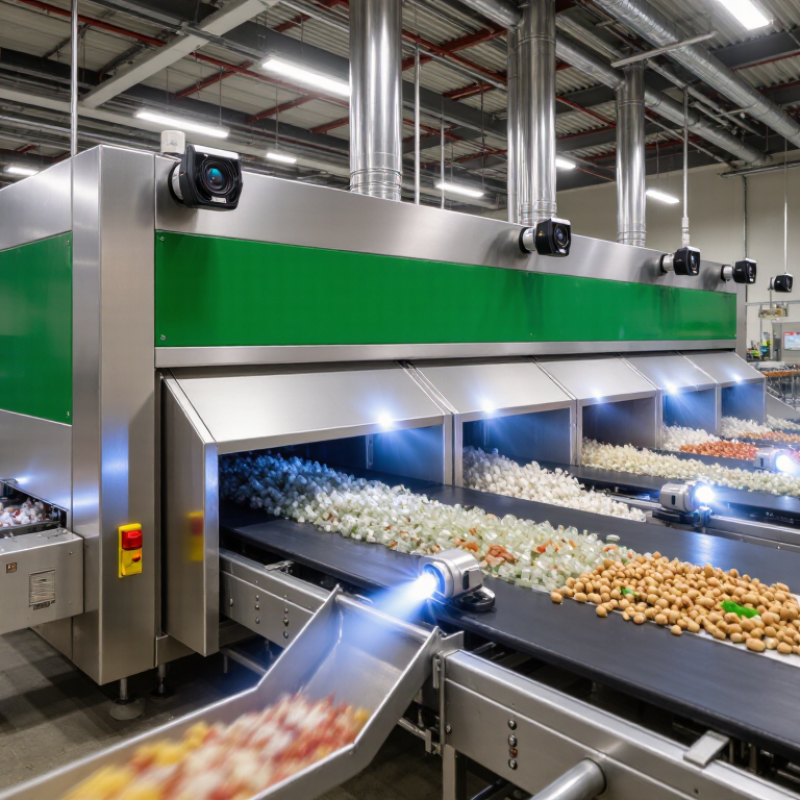
A green machine optical sorter is an automated system that identifies and separates materials on a moving conveyor. It usually combines cameras, near-infrared sensors, software, and precisely timed air jets. These components detect differences in color, shape, polymer type, and surface characteristics. The machine then removes selected items without direct contact.
In a recycling plant, the process looks simple but requires careful control. Mixed material travels beneath bright inspection lights. Sensors scan each item within milliseconds. A control unit calculates its position and activates an air valve at the correct moment. Clean separation depends on belt speed, material spacing, moisture, dust, and sensor calibration. Small errors can reduce product quality.
The word green needs careful examination. Lower energy use matters, but it is not the only measure. A durable sorter may create less waste over its working life. Manufacturers should provide clear data on power consumption, recovery rates, maintenance needs, and spare-part availability. Independent testing is valuable. Operators should also inspect rejected material regularly. A system may perform well in a demonstration, yet struggle with crushed containers or dark plastics. That gap deserves attention.
Green machine optical sorters use cameras, sensors, and software to inspect materials moving on a conveyor. A controlled light source reveals differences in color, shape, texture, and reflectivity. The system compares each item with programmed sorting rules. When it detects an unwanted piece, air nozzles activate milliseconds later. The targeted item moves into a separate chute.
The process needs careful calibration. Material moisture, dust, belt speed, and lighting can affect recognition accuracy. In practical trials, operators should collect samples before and after sorting. This helps identify false rejects and missed items. No setting is perfect. A clean lens and stable airflow matter more than many buyers expect.
Tips: Start with a representative sample. Adjust belt speed gradually. Check ejected materials by hand during commissioning. Record changes in lighting, product size, and moisture. These simple records improve repeatability and help technicians diagnose weak results. It is also wise to question software decisions when the feedstock changes. A sorter trained on dry, uniform material may respond poorly to mixed or damaged pieces. Human review still has value.
Top Green Machine Optical Sorter Manufacturers
Leading green machine manufacturers design optical sorters around measurable recovery, stable operation, and lower resource use. Their systems commonly combine near-infrared sensors, RGB cameras, and intelligent software. These tools identify polymers, paper, metals, colors, and contamination on fast-moving conveyor belts. Accurate detection matters, but consistent performance matters more.
Experienced manufacturers provide adjustable air-jet timing and carefully balanced ejector valves. A misplaced jet can remove valuable material with the target item. That small loss becomes expensive across thousands of operating hours. Modern equipment also uses energy-efficient lighting, variable-speed drives, and remote monitoring. Operators can inspect rejection rates, sensor status, and maintenance alerts from a control panel.
Practical design shows real expertise. Quick-access panels shorten cleaning time around dusty lenses and narrow chutes. Modular sensor assemblies simplify replacement when conditions change. Reliable suppliers support installation, operator training, and documented testing with representative material samples. Independent performance checks are useful, although sample results may not match every facility.
No sorter is perfect. Wet plastics, black packaging, labels, and overlapping objects still challenge detection. Manufacturers should explain these limits clearly instead of promising effortless accuracy. Buyers should examine uptime records, service response, spare-part availability, and energy data. A polished demonstration can look impressive. The conveyor never stays that clean.
Reference spectral windows commonly used in optical sorting systems. Different sensor bands help identify material color, polymer composition, moisture, and other surface characteristics without relying on company-specific data.
How to read the chart: Visible-light cameras support color and shape recognition, while near-infrared and short-wave infrared sensors help distinguish materials by their spectral response. Leading green machine designs often combine these sensing capabilities with high-speed image processing, air-jet ejection, adjustable belt control, and energy-efficient operation.
Top Green Machine Optical Sorter Manufacturers
Comparing Green Machine Optical Sorter Models
Choosing an optical sorter starts with the material, not the brochure. In recycling plants, I compare feed size, moisture, contamination, and expected throughput. These details expose differences between compact, mid-range, and high-capacity models.
Compact models suit limited floor space and moderate material streams. They usually need simpler conveyors and fewer air valves. Their lower purchase cost can help smaller facilities. However, narrow belts may create bottlenecks during peak shifts. Mid-range models often balance throughput, sorting accuracy, and maintenance access. Wider belts improve production, but they require stronger feeding control. High-capacity models handle heavier volumes with advanced cameras and denser ejector arrays. They demand careful calibration and trained operators.
Look closely at detection technology. Near-infrared sensors can identify polymer differences, while color cameras separate visible contaminants. Some systems combine both methods. Ask manufacturers for test results using your actual material. Laboratory samples rarely match dusty, wet, uneven feedstock. In plant trials, I inspect purity, recovery, false rejects, and compressed-air use. Small efficiency losses become expensive across long shifts.
Maintenance also separates similar models. Tool-free access panels save time during belt cleaning. Clear diagnostic screens help technicians locate blocked valves or weak signals. I would not trust a claimed accuracy figure without operating conditions. That figure may change with belt speed, lighting, and material overlap. A practical trial may reveal an uncomfortable truth: the most powerful model is not always the most productive.
| Comparable Machine Configuration | Primary Sorting Principle | Typical Feed Material | Common Detection Sensors | Material Presentation | Reject Mechanism | Typical Sorting Target | Key Strengths | Important Selection Factors | Best-Fit Applications |
|---|---|---|---|---|---|---|---|---|---|
| Color and Visible-Spectrum Sorter | Separates objects according to differences in reflected visible light, color, brightness, and shape. | Recyclable plastics, glass, paper, food products, and agricultural commodities. | High-speed RGB line-scan cameras with image-processing software. | Usually a controlled conveyor or free-fall feed, depending on the machine design. | Compressed-air ejectors activated after image classification. | Color contamination, dark particles, labels, foreign objects, and visibly different items. | Effective for clear visual differences; suitable for many dry, well-presented materials. | Lighting stability, belt speed, object spacing, particle size, and surface cleanliness. | Basic color separation and removal of visible contaminants. |
| Near-Infrared (NIR) Material Sorter | Identifies materials through their characteristic near-infrared spectral response. | Mixed plastic packaging, paper, cardboard, textiles, and other dry recyclables. | NIR sensors, often combined with visible-light cameras. | Most commonly a conveyor-based system with a consistent material layer. | Targeted compressed-air jets remove selected materials from the product stream. | Polymer families, paper versus non-paper, and other material classes with different spectra. | Can distinguish materials that appear similar in visible color. | Moisture, black or heavily pigmented plastics, multilayer items, film orientation, and calibration. | Material recovery facilities and plastic or paper fraction purification. |
| Dual-Sensor Color and NIR Sorter | Combines visible imaging with spectral material recognition in one sorting stage. | Mixed packaging, plastics, paper, glass, and complex dry recycling streams. | Visible-light cameras plus NIR sensors and integrated classification software. | Conveyor presentation with controlled spacing and even distribution. | High-speed air-ejection system with programmable sorting logic. | Simultaneous removal of color defects, foreign objects, and incorrect material types. | Provides broader identification capability than a single-sensor configuration. | Sensor combination, software settings, throughput objectives, compressed-air quality, and maintenance access. | Multi-stage recycling lines requiring both appearance and material-based separation. |
| Free-Fall or Chute-Fed Sorter | Analyzes particles while they pass through a controlled free-fall trajectory. | Granular food products, seeds, grains, nuts, minerals, and small dry particles. | Visible cameras, NIR sensors, or combined optical sensor packages. | Material travels through a chute or falls through a sensor zone in a narrow stream. | Precisely timed air jets divert rejected particles during free fall. | Discoloration, foreign particles, mold-related visual defects, and size or shape anomalies. | Compact material path and accurate particle-level ejection when feed presentation is consistent. | Feed rate, particle size distribution, dust control, chute cleanliness, and air-jet timing. | Food processing and agricultural sorting of relatively uniform granular products. |
| Belt-Fed Whole-Item Sorter | Inspects items on a moving belt and classifies them using image and spectral data. | Whole plastic containers, packaging, glass containers, electronic components, and bulky recyclables. | Visible cameras, NIR sensors, shape-analysis software, and optional metal detection. | Items are conveyed on a belt with an emphasis on spacing and exposure of the target surface. | Air jets or mechanical diversion, depending on item size and line configuration. | Incorrect material, color mismatch, labels, attached items, and unwanted objects. | Handles larger objects and enables inspection of item geometry and surface appearance. | Belt width, object overlap, orientation, line speed, dust, and the portion of each item visible to sensors. | Container recovery, packaging inspection, and whole-item recycling lines. |
| Fine-Particle Optical Sorter | Uses high-resolution optical inspection and rapid ejection for small, closely spaced particles. | Small plastic flakes, glass cullet, minerals, rice, seeds, and processed food particles. | High-resolution cameras, NIR sensors, or laser-assisted optical detection. | Specialized chute or narrow-belt presentation designed for small particles. | Fast, individually timed compressed-air jets. | Small color defects, fine foreign particles, and material contamination. | Designed for precise separation where particle size and defect visibility are critical. | Minimum particle size, feed uniformity, dust accumulation, air consumption, and sensor resolution. | Flake purification, fine glass sorting, seed cleaning, and high-value product upgrading. |
| Multi-Ejector Sorting Line | Uses multiple sorting zones or machines in sequence to create several product fractions. | Mixed municipal recyclables, plastics, paper, glass, and complex industrial feed streams. | Combination of visible cameras, NIR sensors, metal detectors, and control software. | Conveyor-based arrangement with transfer points between sorting stages. | Multiple air-ejection stages, with each stage assigned to a defined target fraction. | Sequential recovery of valuable materials and removal of different contaminant groups. | Supports higher overall purity and recovery by dividing the process into specialized steps. | System layout, material flow balance, cross-contamination control, controls integration, and maintenance planning. | Large recycling plants and installations requiring multiple recovered output streams. |
| Technical note: Actual throughput, detection limits, recovery, purity, power use, air consumption, and conveyor dimensions depend on the material, moisture, particle-size distribution, feed presentation, sensor package, machine width, and line configuration. The configurations above describe common optical-sorter categories rather than manufacturer-specific specifications. | |||||||||
Green machine optical sorters are used in recycling plants to identify and separate materials by color, shape, and spectral response. Common applications include mixed plastics, paper, glass, compost feedstock, and packaging streams. In a working facility, the sorter may face dust, vibration, moisture, and irregular belt loading. These conditions can reduce accuracy.
Selection should begin with the material, not the equipment brochure. Ask manufacturers for trial results using representative samples from your own line. A sample containing wet labels, dark plastics, or crushed containers can expose weaknesses quickly.
Check detection sensors, air-jet response, belt width, throughput, and reject purity. Small details matter. Very much.
Reliable suppliers should explain calibration procedures and provide measurable performance data. Look for documented uptime, operator training, spare-part availability, and remote diagnostic support. Installation experience also matters because poor lighting, unstable air pressure, or an uneven feed can undermine a strong system.
I have seen plants blame the sorter when the real problem was inconsistent material distribution.
Energy use deserves attention, especially in facilities operating multiple shifts. Compare power consumption, compressed-air demand, maintenance intervals, and software update policies. A higher purchase price may be reasonable if the system reduces manual sorting and contamination. Still, projected savings should be tested against local labor costs and actual recovery rates. Some specifications look impressive, but they may not reflect difficult, changing feedstock.


