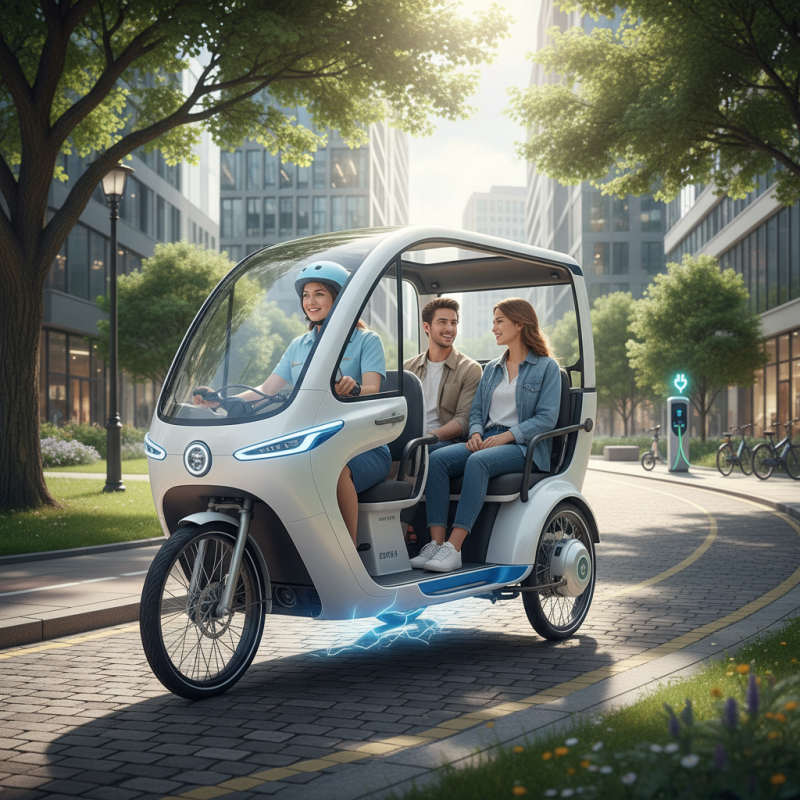
What is an Electric Passenger Tricycle and How Does It Work?
The electric passenger tricycle is a modern solution for urban transportation. Designed for convenience, it offers a unique blend of comfort and sustainability. This vehicle operates using an electric motor, making it an eco-friendly option for short commutes.
Riding an electric passenger tricycle feels different from traditional bicycles. The quiet motor provides a smooth, relaxed journey. Passengers can enjoy the scenery without the hassle of noise and emissions. The design often includes a spacious cabin, accommodating multiple riders safely.
However, the electric passenger tricycle has its challenges. Battery life can vary, affecting long-distance travel. Riders may also face questions about safety regulations and potential maintenance needs. These factors are essential to consider if you're thinking about this mode of transport. Overall, the electric passenger tricycle represents a step forward in urban mobility, despite some imperfections.
What is an Electric Passenger Tricycle?
An electric passenger tricycle is a three-wheeled vehicle powered by an electric motor. These vehicles are designed to carry passengers comfortably. They often have spacious seating and a canopy for protection against the elements. The rising interest in eco-friendly transport options has increased their popularity.
Industry reports indicate that the electric tricycle market is growing rapidly. According to a recent analysis, the global electric tricycle market is expected to reach $4.5 billion by 2027, driven by urbanization and a shift towards sustainable living. Many people find electric tricycles appealing as they provide an efficient way to navigate congested cities. They also offer an affordable alternative to traditional public transport.
Despite their advantages, there are challenges to address. Battery life and performance in hilly areas can be inconsistent. There’s a need for improvements in charging infrastructure. As cities implement more bike lanes, electric tricycles might face integration issues with existing traffic. Understanding these factors is essential for future development.
Key Components of an Electric Passenger Tricycle
Electric passenger tricycles are gaining popularity for urban transportation. Understanding their key components helps in grasping how they function. The most essential part is the electric motor. This motor provides the tricycle with the needed power, allowing it to travel effortlessly. It is usually paired with a rechargeable battery, which serves as the energy source. The battery capacity determines how far the tricycle can go on a single charge.
Another crucial element is the frame. Electric passenger tricycles often have a robust frame designed for stability. This frame supports the weight of passengers and cargo while ensuring a smooth ride. The seating arrangement is also significant, as it enhances comfort for the riders. Many models include safety features like seatbelts and lights, ensuring a secure journey.
Tips: Always check the battery level before starting your trip. Regular maintenance on the motor can prolong the tricycle's life. It's important to familiarize yourself with the tricycle's controls. This knowledge enhances your riding experience and safety.
How Electric Passenger Tricycles Work: A Step-by-Step Breakdown
Electric passenger tricycles offer a unique blend of convenience and sustainability. These vehicles are designed to carry passengers smoothly and efficiently. They typically feature three wheels, providing stability and safety. With a compact design, they're ideal for urban environments. The key components include an electric motor, battery, and control system.
When you pedal or press the throttle, the motor engages. The electric motor draws power from the battery, which is usually rechargeable. This setup reduces your carbon footprint compared to traditional vehicles. However, many users report challenges with battery longevity and charging times.
Understanding how the electric passenger tricycle operates helps maximize its benefits. The combination of manual pedaling and electric assistance can lead to a balanced mode of transport. Some tricycles contain features like regenerative braking. This process captures energy during braking, enhancing battery life. Though typically efficient, users must remain aware of weight limits and terrain effects on performance.
Advantages of Using an Electric Passenger Tricycle
Electric passenger tricycles are becoming increasingly popular in urban areas. They offer a unique solution for short-distance travel. These vehicles are especially useful in crowded cities where traditional transportation can be a hassle. The spacious seating and stability make them perfect for both families and individuals.
One major advantage is their eco-friendliness. They run on electric power, reducing carbon footprints. This is a significant benefit in combating pollution. Additionally, the operational costs are lower than those of conventional vehicles, making them economical. The ease of use also stands out. Riders can maneuver through traffic easily.
However, some challenges remain. Charging infrastructure needs improvement in many areas. Users may face range anxiety if local charging stations are scarce. Maintenance is another consideration. While generally reliable, electric systems require specialized care. This can be a barrier for some. Nonetheless, the advantages often outweigh these concerns for many urban commuters.
Electric Passenger Tricycle Usage Statistics
This bar chart illustrates the various applications of electric passenger tricycles in different sectors. As seen, urban transport accounts for the largest percentage of usage, indicating a growing trend in eco-friendly transportation solutions.
Common Applications and Uses of Electric Passenger Tricycles
Electric passenger tricycles are gaining popularity for various applications. They are an eco-friendly solution for urban commuting, especially in crowded areas. Many people use them for short trips around the city. These tricycles provide a steady and stable ride, making them a safe option for families with children.
In rural areas, electric tricycles serve multiple purposes. They are often used for deliveries, transporting goods, or carrying passengers over short distances. Their ability to navigate narrow roads makes them practical in less developed regions. Some communities implement them for local tourism. People enjoy riding them for leisure, offering a unique way to explore scenic areas.
While they offer many benefits, electric tricycles face challenges. Some users report limited battery life for long journeys. Maintenance can be tricky for others, especially in remote locations. Furthermore, not all tricycles have the best safety features. Users need to prioritize safety and consider the terrain where they will ride. Continuous improvement and awareness are key to maximizing their potential.