How to Choose Lifting Chains in 2026?

Choosing lifting chains in 2026 requires more than comparing prices or chain diameter. The correct choice protects workers, equipment, and the load itself. A chain may look strong, yet its working load limit can change with the hitch type, angle, temperature, or attached fittings. Small details matter.

This guide explains how to evaluate lifting chains through practical and technical criteria. You will learn how chain grade, alloy composition, link size, end fittings, and working load limit affect performance. It also considers corrosion, abrasion, sharp edges, shock loading, and repeated use. Standards such as ASME B30.9, EN 818, and local workplace requirements may provide valuable guidance, but users should confirm the rules that apply to their location and industry.

In a real workshop, a chain often works near oil, dust, heat, and uneven surfaces. A tag can become unreadable. A hook latch may stop closing correctly. These signs should never be ignored. A qualified person should inspect the assembly before use, after unusual loading, and at planned intervals. Documentation also matters, including certificates, inspection records, and clear manufacturer markings.

The choice is not always obvious.

Some buyers focus too heavily on breaking strength. That can be misleading. Safe lifting depends on the complete assembly, not the chain alone. A higher-grade chain may still be unsuitable when its fittings, angles, or environment are poorly matched. This article offers a careful framework for selecting lifting chains, while acknowledging an uncomfortable truth: no checklist replaces competent judgment at the lifting site.

How to Choose Lifting Chains in 2026?

Lifting Chain Basics: Types, Grades, and Key Components

How to Choose Lifting Chains in 2026?

Lifting chain basics start with the chain type. Alloy steel chain is common for overhead lifting because it combines strength, toughness, and repairable links. Grade 80 suits many routine lifts. Grade 100 offers higher capacity with similar chain size. Grade 120 can reduce weight, but it demands stricter inspection and compatible components. Do not choose by grade alone. Confirm the working load limit, lifting angle, temperature, and expected shock loading. A chain may look strong and still be unsuitable.

Key components deserve equal attention. Inspect the master link, connecting links, hooks, safety latches, and shortening devices. Every part must match the chain grade and rated capacity. At a 60-degree sling angle, leg tension rises sharply. That detail is often missed. Check for stretched links, bent hooks, deep scratches, corrosion, and missing identification tags. Remove damaged equipment from service. Follow current regulations and the manufacturer’s instructions. Records, inspection dates, and traceable identification improve reliability, though paperwork alone cannot prove safety.

Tips: Measure the load before selecting chain length. Keep the load balanced. Avoid knots and side loading. Store chains dry and off the floor. When uncertain, stop the lift and ask a qualified lifting professional. No shortcut is worth a dropped load. I still find angle calculations easy to underestimate, so a second check is sensible.

Assessing Load Requirements and Working Conditions

How to Choose Lifting Chains in 2026?

Assessing Load Requirements and Working Conditions

Choosing a lifting chain starts with the real load, not an estimated figure. Record the load’s weight, shape, lifting points, and center of gravity. Include slings, hooks, and connecting hardware in the calculation. A chain’s working load limit must exceed the total demand. Never rely on breaking strength alone.

Angles can change everything. As the sling angle decreases, tension rises sharply in each chain leg. Uneven loading may overload one leg without obvious warning. Avoid sudden pulls and shock loading. It can create forces far beyond the static weight. Leave room for uncertainty.

Working conditions deserve equal attention. Heat, moisture, dust, impact, and chemical exposure can weaken chain surfaces or reduce service life. Select a suitable chain grade and protective finish for the environment. Inspect for stretched links, bent sections, gouges, corrosion, and damaged fittings. Remove questionable equipment from service.

A neat calculation can still mislead. Real lifting areas are rarely perfect. I would reassess the chain when the load changes, the lifting angle shifts, or site conditions deteriorate. Keep inspection records, follow current safety requirements, and involve a trained lifting professional for complex operations. Shortcuts are expensive. Safety margins matter.

How to Choose Lifting Chains in 2026?

Assessing Load Requirements and Working Conditions

The chart shows nominal working load limits for Grade 80 alloy steel chain used in a single-leg vertical lift. Larger chain diameters provide higher capacity, but the selected chain must also account for sling angle, load shape, edge contact, temperature, shock loading, wear, corrosion, and applicable lifting regulations. Always use the lowest rated component in the lifting system and verify the current manufacturer and standard requirements before use.

Matching Chain Specifications to Lifting Equipment

How to Choose Lifting Chains in 2026?

Matching Chain Specifications to Lifting Equipment

Choosing a lifting chain starts with the equipment, not the chain diameter. Check the hoist’s rated capacity, lift speed, hook shape, and connection points. Then match the chain’s working load limit to the real load, including rigging weight. Chain grade, link size, and leg configuration also matter. A two-leg sling does not always provide twice the capacity. Sling angles can reduce capacity sharply, especially below 45 degrees.

Look for clear identification marks, inspection records, and compatible hooks or master links. Alloy lifting chains are common, but grade alone cannot confirm safe use. Temperature, sharp edges, impact loading, and chemical exposure may weaken the assembly. A chain rubbing against a rough beam can suffer damage before the operator notices it. I have seen teams focus on breaking strength and overlook the working load limit. That mistake deserves more attention.

Tips: Measure the load first. Confirm the center of gravity. Keep sling angles as wide as practical. Inspect every link for stretching, cracks, gouges, or corrosion. Remove questionable chains from service until a competent inspector evaluates them. Do not force a hook into an unsuitable connection point. The best specification is the one that fits the equipment, load path, and working environment together.

Checking Safety Standards, Inspection, and Certification

Choosing lifting chains in 2026 requires more than checking chain diameter or working load limit. Safety standards should guide every decision. Confirm the chain’s grade, rated capacity, temperature range, and intended lifting angle. A competent inspector should verify that the chain suits the load, sling configuration, and working environment. Small details matter. Sharp edges, heat, chemicals, and sudden loading can reduce strength quickly.

Inspection records should be clear and traceable. Before each use, look for stretched links, bent sections, deep scratches, corrosion, damaged welds, or unreadable identification tags. Formal inspections should follow the applicable local regulations and recognized lifting standards. Certification must match the actual chain, not merely a similar product. Check test certificates, batch details, inspection dates, and the organization’s qualifications. If paperwork feels vague, stop and investigate. I have seen teams trust clean-looking chains too quickly; appearance alone proves very little.

Tips: Keep a simple inspection log with photographs and load details. Remove questionable chains from service immediately, then request assessment by a qualified person. Never guess a chain’s capacity from memory. Ask for written evidence. Certification is useful, but competent selection and repeated inspection remain essential. A careful reassessment may feel inconvenient, yet it can reveal changing risks that the original certificate never covered.

How to Choose Lifting Chains in 2026? - Checking Safety Standards, Inspection, and Certification

Selection Dimension What to Check Relevant Requirement or Reference Acceptance Criteria Required Evidence or Action
Chain Type Select a chain specifically manufactured and marked for overhead lifting, not a general-purpose transport, towing, or hardware chain. EN 818-2; ASME B30.9; OSHA 29 CFR 1910.184 Use a proof-tested alloy-steel lifting chain with a documented working load limit (WLL). Confirm the product marking, certificate, and manufacturer load chart before use.
Material and Grade Verify the alloy-steel chain grade shown on the identification tag or certificate. Common lifting-chain classifications include Grade 80, Grade 100, and Grade 120 under applicable regional standards. Choose only a grade and configuration whose WLL is suitable for the load, temperature, hitch type, and lifting angle. Do not calculate WLL from chain diameter or grade alone; use the applicable certified load table.
Chain Diameter Measure the nominal diameter and compare it with the identification marking and certified specification. Nominal diameter is normally identified in millimetres, such as 8 mm, 10 mm, or 13 mm. The diameter, link dimensions, and chain grade must match the certified sling assembly. Remove from service if the diameter is below the applicable rejection limit or if the chain identity cannot be confirmed.
Working Load Limit Check the WLL for the exact chain size, grade, number of legs, hitch type, and lifting angle. WLL must be established by the applicable standard and the certified manufacturer load chart. The load must not exceed the lowest rated component in the complete assembly, including hooks, master links, connectors, and shortening devices. Record the selected WLL and compare it with the total lifted load before each lift.
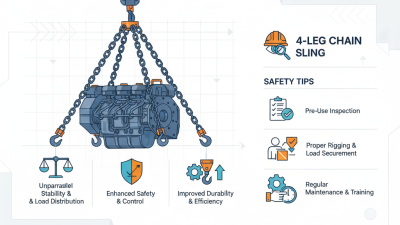
Number of Sling Legs Identify whether the assembly is single-leg, two-leg, three-leg, or four-leg. Multi-leg sling capacity depends on leg count, angle, load distribution, and the applicable standard. Do not assume that every leg carries an equal share. Account for unequal loading and the possibility that only two legs effectively support the load. Use a certified multi-leg sling rating rather than adding the individual leg ratings without approval.
Lifting Angle Measure the included angle between sling legs or the angle of each leg from the horizontal, as specified by the load chart. For two equally loaded legs, leg tension increases as the angle from the horizontal decreases. As a basic engineering relationship, leg tension is W ÷ (2 × sin θ), where W is the load and θ is the leg angle from horizontal. At 60°, 45°, and 30°, the per-leg tension is approximately 0.577W, 0.707W, and 1.000W respectively. Use the certified angle-rated WLL. Never use a sling below the minimum angle permitted by its documentation.
Hitch Configuration Confirm whether the chain is used in a vertical, choker, or basket hitch. WLL changes with the hitch type and may also be limited by the connection geometry. Use only the hitch configuration shown on the certified rating tag or load chart. A choker hitch must not be tightened by shock loading. Protect the chain from sharp edges and verify that the load cannot slip from the selected hitch.
Identification Tag Inspect the tag or durable marking for size, grade, WLL, length, number of legs, hitch ratings, and traceability information. OSHA 29 CFR 1910.184 and EN 818-2 require identification and rated-capacity information for applicable lifting assemblies. A missing, illegible, or mismatched tag is a reason to quarantine the assembly until its identity and capacity are verified. Keep the inspection record linked to the chain identification or asset number.
Pre-Use Inspection Check every link, hook, master link, connector, latch, and shortening device before use. OSHA requires alloy steel chain slings to be inspected before use on each shift and during use when conditions warrant. There must be no cracks, bends, twists, excessive wear, stretched links, gouges, severe corrosion, heat damage, or defective components. Remove from service immediately when a hazardous defect is found. Do not return it to service without an authorized evaluation.
Periodic Inspection Carry out a documented examination at an interval appropriate to the operating environment and frequency of use. OSHA 29 CFR 1910.184 requires periodic inspection at intervals of no more than 12 months, or more frequently when service conditions require. High-cycle, corrosive, abrasive, high-temperature, or shock-loading service requires a shorter inspection interval determined by a competent person. Record the date, inspector, identification number, findings, disposition, and next due date.
Wear and Link Diameter Measure wear at locations subject to friction, especially bearing points and contact areas. Rejection limits depend on the governing standard, chain type, and manufacturer instructions. Reject when wear, reduction in cross-sectional area, gouging, or deformation exceeds the applicable documented limit. Do not rely on visual judgment alone where measurement is required. Use calibrated measuring equipment and retain the measurement record.
Cracks and Deformation Look for cracks, nicks, gouges, bent or elongated links, stretched openings, twisted links, and damaged weld areas. Cracked, distorted, or materially deformed load-bearing components are not acceptable for overhead lifting. Any crack or significant deformation requires immediate removal from service. Do not straighten, weld, or repair a load-bearing chain without an approved process and competent authority. Quarantine the chain and arrange evaluation or destruction according to the site procedure.
Heat and Chemical Exposure Check for heat discoloration, weld spatter, arc strikes, chemical attack, pitting, and loss of material. Permitted temperature ranges and derating requirements vary by chain grade and standard. Do not use a chain exposed to temperatures or chemicals outside its documented limits unless it has been assessed and approved by a competent person. Review the material-safety information and the chain manufacturer’s temperature and chemical-resistance instructions.
Hooks and Latches Inspect hook throat opening, latch operation, tip condition, bowl wear, twisting, cracks, and welds. Hooks must be compatible with the chain assembly and rated for the intended load. Reject hooks with a visibly increased throat opening, a bent or twisted body, a damaged latch, cracks, or loading at the tip or back of the hook. Ensure the load is seated in the hook bowl and the latch closes correctly before lifting.
Connectors and Master Links Verify that connecting links, coupling devices, master links, and shortening components are compatible and correctly assembled. Components must be rated for the same or greater capacity than the chain assembly and suitable for the intended configuration. No incompatible parts, unauthorized substitutions, loose pins, excessive wear, or incorrect assembly are permitted. Check component markings and assembly instructions against the certification record.
Proof Test and Certification Request documentation demonstrating that the chain or sling assembly was manufactured and tested to the claimed standard. EN 818-2 covers short-link Grade 8 alloy-steel chain for lifting purposes; ASME B30.9 addresses slings; OSHA sets workplace requirements in the United States. Documentation should identify the chain or assembly, grade, size, WLL, applicable standard, test or inspection basis, and traceability information. Verify that certificates correspond to the actual tag, dimensions, components, and configuration.
Storage Store chains off the floor in a clean, dry location away from moisture, chemicals, welding areas, and mechanical damage. Good lifting practice requires protection from corrosion, contamination, kinking, and unauthorized use. Chains should be stored without sharp bends, knots, or contact with corrosive materials. Use racks or designated storage points and keep rejected chains physically separated.
Use Conditions Assess sharp edges, load stability, shock loading, dragging, snagging, side loading, and possible impact. Lifting-chain ratings assume controlled loading and the configuration stated in the applicable documentation. Do not shock load, drag a chain, use it as a sling for a load that can cut the links, or side-load hooks and connectors unless specifically designed and rated for that use. Use suitable edge protection, tag lines, lifting points, and a controlled lifting plan.
Final Selection Decision Compare the load, configuration, environment, inspection status, and certification before purchase or use. The selected assembly must satisfy all applicable legal, site, and technical requirements. Select only a traceable, correctly marked, inspected, certified assembly with a WLL greater than or equal to the calculated demand. Approve the lift only after documentation and physical condition have both been verified.
Important: Working load limits, rejection limits, temperature deratings, and inspection requirements can vary by jurisdiction, chain grade, sling configuration, and manufacturer instructions. Where requirements differ, apply the most restrictive applicable requirement and consult a competent lifting professional.

Comparing Durability, Maintenance Needs, and Total Cost

How to Choose Lifting Chains in 2026?

Comparing Durability, Maintenance Needs, and Total Cost

Choosing a lifting chain starts with the real workload, not the lowest purchase price. Confirm the working load limit, chain grade, diameter, and lifting angle before comparing costs. A chain handling sharp impacts needs stronger fatigue resistance than one used for steady indoor lifting. Heat, moisture, dust, and chemical exposure also affect durability. Small details matter.

I have seen chains look acceptable during a quick visual check, yet show stretched links and worn contact points. That assumption was too simple. Inspect links, hooks, connecting parts, and markings before every shift. Look for cracks, deformation, corrosion, unusual elongation, and damaged identification. Keep inspection records. Clean and lubricate chains according to the manufacturer’s instructions, while keeping abrasive dust away from moving surfaces. Remove questionable chains from service immediately.

Maintenance creates labor costs, but neglect creates larger costs. Include inspection time, lubrication, storage, training, replacement intervals, and possible equipment downtime in the calculation. A cheaper chain may demand frequent replacement in a wet workshop. A more durable chain may reduce interruptions, but only when operators use it correctly. I would compare total cost over three to five years, not one invoice. That estimate remains imperfect because workloads change. Recheck it after seasonal demand, new equipment, or repeated damage.