China Best Rigging Slings for Global Buyers?

The question “China Best Rigging Slings for Global Buyers?” needs more than a low factory price. Buyers must examine strength, traceability, material quality, and supplier consistency. The right sling depends on load weight, lifting angle, edge condition, temperature, and handling frequency. A polyester web sling may suit delicate equipment, while wire rope or round slings may fit demanding industrial work. There is no universal best choice.

This guide explores how experienced buyers can assess Chinese rigging slings with greater confidence. It considers working load limits, safety factors, stitching quality, protective sleeves, labels, and inspection records. Clear product markings should match test certificates and purchase documents. A reliable manufacturer should explain production controls, batch testing, packaging, and replacement guidance without vague promises. Ask for evidence.

Practical details matter. Look for even stitching, clean edges, readable tags, and protective packaging. A sling arriving with crushed fibers or missing identification deserves immediate attention. Buyers should also confirm applicable international requirements with qualified local professionals. Standards and project conditions can differ across markets.

Supplier audits, sample testing, and communication trials can reveal problems early. Still, mistakes happen. A polished catalog does not guarantee stable production. Even experienced teams may overlook sling angles or sharp contact points. That weakness deserves honest review. The safest purchasing decision combines technical evidence, careful inspection, and realistic application planning. This approach helps global buyers select dependable rigging slings from China, rather than choosing products based only on attractive photographs or aggressive pricing.
China Best Rigging Slings for Global Buyers?

Rigging Sling Types Made in China and Their Best Uses

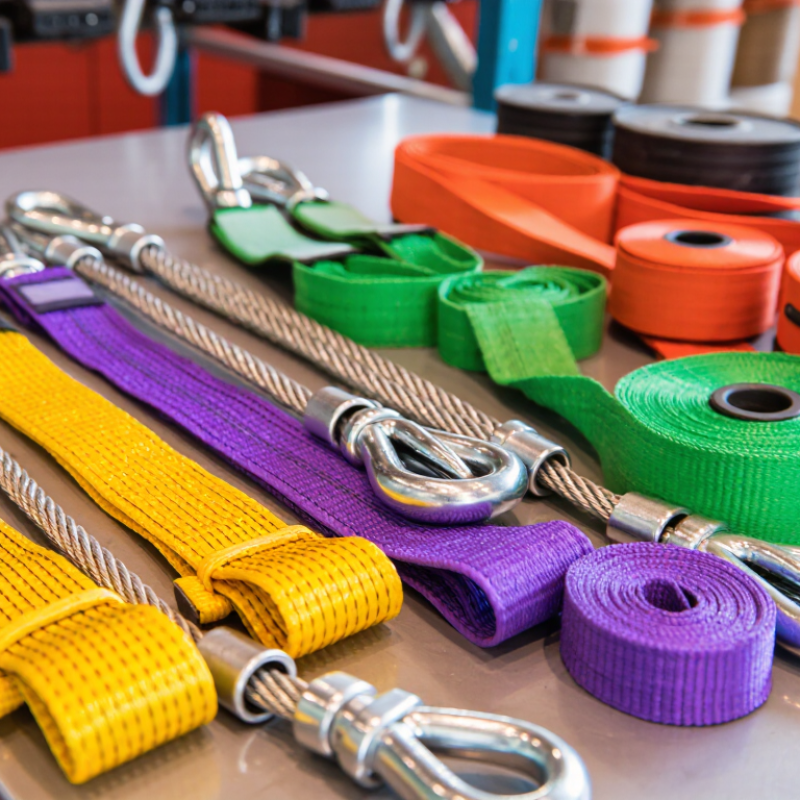
China-made rigging slings serve lifting teams across construction, ports, factories, and renewable-energy projects. The right type depends on load shape, weight, temperature, and lifting method. Webbing slings are lightweight and flexible, making them suitable for painted machinery, steel frames, and awkward loads. Their soft surface can reduce scratching, but sharp edges require proper corner protection.

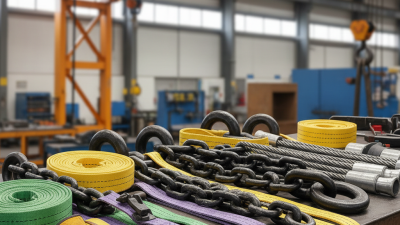
Round slings provide strong, balanced support around cylindrical equipment, pipes, and vessels. They can fit into narrow lifting points. Wire rope slings handle abrasion and heat better, so operators often use them around steel structures, ship components, and outdoor installations. Chain slings tolerate rough handling and adjustable angles. They suit heavy machinery, foundry work, and loads with rugged contact points.

Read the label. Small details matter. Each sling should show its working load limit, length, material, and traceability information. Buyers should request test records, inspection procedures, and evidence of quality control before shipment. The working load limit changes with hitch type, sling angle, and connection hardware. A bright color is not proof of safety. In practical inspections, cuts, melted fibers, broken wires, stretched links, and illegible tags require immediate attention. Some selection decisions remain difficult, especially when loading conditions change during transport. Recheck the sling after trial lifting, because real contact points can differ from drawings. Competent personnel should inspect and use the equipment according to applicable local requirements.

China-Made Rigging Sling Types and Their Best Uses

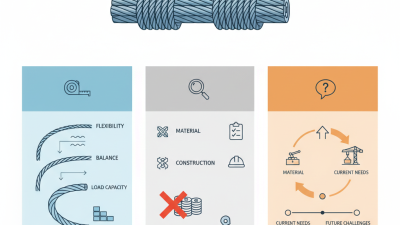
This chart compares commonly referenced minimum design factors for major sling categories. Textile web and round slings are lightweight and suitable for finished surfaces, wire rope slings are preferred for abrasion resistance and general industrial lifting, and alloy steel chain slings are suitable for heavy, hot, sharp-edged, or rugged loads.

Reference values are commonly associated with ASME B30.9 and EN 1492 requirements: textile slings are typically 7:1, wire rope slings 5:1, and alloy steel chain slings 4:1. Always confirm the working load limit, sling angle, temperature range, inspection criteria, and applicable local regulations before use.

How to Evaluate Sling Materials, Load Ratings, and Safety Factors

China Best Rigging Slings for Global Buyers?

How to Evaluate Sling Materials, Load Ratings, and Safety Factors

Material selection starts with the working environment, not the purchase price. Polyester resists moisture and has low stretch. Nylon handles shock loading better but loses strength around acids and moisture. Wire rope tolerates heat, yet corrosion and broken wires demand close inspection. I still recheck chemical compatibility twice. A catalogue can hide practical weaknesses.

Rated capacity must match the hitch, angle, and lifting method. For a two-leg sling lifting two tonnes, each leg carries two tonnes at 30 degrees from horizontal. At 60 degrees, each leg carries about 1.15 tonnes. OSHA 29 CFR 1910.184 requires synthetic web slings to use a minimum 5:1 design factor. ASME B30.9 also requires identification showing rated capacities and proper configurations. Never treat that label as universal capacity.

Inspection needs evidence, not confidence. Remove slings showing cuts, melted fibres, damaged stitching, chemical burns, or distorted fittings. HSE’s 2023/24 workplace statistics recorded 138 worker fatalities in Great Britain, reinforcing the cost of weak lifting controls. Record sling age, load history, inspection date, and storage conditions. Keep textiles away from sharp edges and direct sunlight. I have seen clean-looking slings fail after hidden abrasion. That mistake is easy to repeat.

China Best Rigging Slings for Global Buyers? - How to Evaluate Sling Materials, Load Ratings, and Safety Factors

Sling Type Primary Material Typical Working Load Limit (WLL) Common Design / Safety Factor Weight and Handling Temperature Guidance Chemical and Environmental Performance Best Application Key Inspection Risks Relevant Standards
Flat Webbing Sling High-tenacity polyester webbing Approximately 1–10 t in straight lift for common widths and constructions Commonly 7:1 minimum under EN 1492-1; 5:1 is widely used under ASME B30.9-based products Very light, flexible, and easy to position around loads Typical polyester service range is about −40°C to +100°C; follow the manufacturer’s limit Good resistance to moisture and many acids; can be damaged by strong alkalis, sharp edges, heat, and ultraviolet exposure General lifting, machinery, painted surfaces, and loads requiring surface protection Cuts, edge damage, abrasion, pulled stitching, chemical attack, melted fibers, and illegible labels EN 1492-1; ASME B30.9
Endless Round Sling Polyester load-bearing core with protective cover Approximately 1–100 t or more, depending on core size and lifting configuration Commonly 7:1 under EN 1492-2; 5:1 is widely used under ASME B30.9-based products Light relative to steel products; conforms well to irregular loads Typical polyester service range is about −40°C to +100°C; avoid direct contact with molten metal Good moisture resistance and low stretch; vulnerable to cuts, heat, sharp edges, and some concentrated chemicals Choker lifting, bundled loads, delicate surfaces, and loads with limited access points Hidden core damage, cover cuts, abrasion, heat glazing, chemical contamination, and flattened sections EN 1492-2; ASME B30.9
Wire Rope Sling Steel wire rope with eyes, thimbles, or mechanical splices Approximately 1–50 t for common single-leg and multi-leg assemblies; configuration dependent Commonly 5:1 minimum under ASME B30.9; exact rating depends on rope construction, termination, and hitch angle Heavier and less flexible than synthetic slings; highly durable in abrasive service Suitable for higher temperatures than synthetic slings, but strength decreases as temperature rises; consult the rated limit for the rope and termination Good abrasion resistance; susceptible to corrosion, birdcaging, kinking, crushing, and chemical attack Steel fabrication, construction, outdoor lifting, and abrasive or heavy-duty applications Broken wires, corrosion, kinks, crushed sections, damaged thimbles, end-fitting deformation, and diameter reduction ASME B30.9; EN 13414 series
Alloy Steel Chain Sling Grade 80 or Grade 100 alloy steel chain and fittings Approximately 1–50 t for common assemblies; determined by chain size, grade, number of legs, and angle Commonly 4:1 minimum under ASME B30.9-based practice; capacity must be reduced for certain angles and conditions Heavy but highly adjustable and resistant to sharp edges and rough handling High-temperature use requires derating; never assume the room-temperature WLL applies at elevated temperatures Good abrasion resistance; corrosion, acid exposure, and welding heat can seriously reduce capacity Foundry work, heavy machinery, structural steel, and loads with sharp or abrasive contact points Stretched or bent links, gouges, nicks, corrosion, cracked fittings, damaged hooks, and excessive wear ASME B30.9; EN 818 series
High-Performance Fiber Sling HMPE or other high-performance synthetic fiber with protective cover Approximately 10–300 t or more in specialized products Product-specific; commonly 5:1 or higher, but the certified WLL must be used Extremely light for its capacity; easy to transport and install Temperature limits are product-specific and generally lower than steel; heat exposure must be strictly controlled Low water absorption and strong chemical resistance in many applications; sensitive to heat, abrasion, UV, and localized damage Offshore lifting, wind-energy components, marine work, and very high-capacity lifts where low weight matters Cover damage, localized crushing, heat exposure, contamination, core displacement, and label loss ASME B30.9; applicable product-specific and manufacturer certification requirements
Polypropylene Webbing Sling Polypropylene synthetic webbing Commonly below 5 t for general-purpose configurations Must be verified from the product certificate; design factors vary by applicable standard and construction Very light and economical; generally less abrasion-resistant than polyester Lower continuous-temperature capability than polyester; heat and hot surfaces can cause rapid damage Good resistance to many acids and alkalis; vulnerable to UV degradation, oxidation, and some solvents Light-duty lifting, moisture-prone environments, and applications requiring low water absorption Fading, brittleness, melting, abrasion, cuts, chemical damage, and weakened stitching Applicable local regulations and certified product specifications

Evaluation rule: Select the sling by the certified WLL for the actual hitch type, number of legs, sling angle, load geometry, edge condition, and temperature—not by material name alone.

Important: WLL ranges above are indicative values for comparison. The identification tag, test certificate, applicable standard, and manufacturer’s configuration-specific rating always take priority.

Safety practice: Never exceed the marked WLL, never use an untagged or visibly damaged sling, protect synthetic slings from sharp edges, and ensure inspections are performed by competent personnel.

Key Quality Standards for Chinese Rigging Sling Manufacturers

China Best Rigging Slings for Global Buyers?

Key Quality Standards for Chinese Rigging Sling Manufacturers

Reliable rigging slings begin with controlled materials, not attractive packaging. Chinese manufacturers should identify webbing fibers, breaking strength, width, and color codes for each production batch. Buyers should request test records linked to traceable lot numbers. A certificate alone is not enough.

Manufacturers should design slings according to recognized requirements, such as EN 1492-1 or ASME B30.9, where applicable. Clear working load limits must appear on durable labels. Stitching deserves close inspection. Even rows, reinforced eyes, and protected edges reduce damage during lifting. A competent factory also checks abrasion, heat, ultraviolet exposure, and chemical resistance. Proof testing should follow the declared design and customer requirements.

Factory experience matters during real inspections. I look for clean sewing areas, calibrated testing equipment, and workers who can explain rejection procedures. Small details reveal more than polished brochures. In practice, paperwork may look better than the product. That deserves honest review. Buyers should compare batch samples, inspection photos, and independent test results before placing large orders. They should also confirm storage guidance, inspection intervals, and replacement criteria. A sling can appear intact while internal fibers have weakened. Reliable manufacturers explain that risk clearly, without promising unlimited service life.

How Global Buyers Can Compare Suppliers, Prices, and Custom Options

China Best Rigging Slings for Global Buyers?

How Global Buyers Can Compare Suppliers, Prices, and Custom Options

Global buyers comparing rigging sling suppliers need more than a low quotation. In my sourcing experience, a reliable supplier explains load capacity, sling width, fiber type, safety factor, and inspection methods. Ask for recent test reports, traceable batch numbers, and clear product photos. Check whether labels match the documents. Small mismatches matter. A web catalog cannot show stitching quality, edge protection, or handling performance.

Price comparisons become useful only when specifications match. Request identical lengths, lifting configurations, rated capacities, packaging, and delivery terms. A cheaper offer may exclude testing, protective sleeves, or export packaging. Compare the full landed cost, including freight, duties, sampling, and replacement risk. I prefer written quotations with validity dates and payment milestones. Still, price is not proof of quality. A missing certificate can change the decision.

Custom options can improve safety and workflow. Buyers may request color coding, printed identification, special lengths, reinforced eyes, or abrasion-resistant covers. Ask how design changes affect capacity and production time. Require a pre-production sample when the order is complex. Measure it physically; assumptions often survive too long. Suppliers should explain inspection points and corrective actions, not merely promise compliance. Keep records of drawings, approvals, and final test results for future purchasing reviews.

Inspection, Certification, Shipping, and Import Considerations

China Best Rigging Slings for Global Buyers?

Buying rigging slings from China requires more than comparing prices. Before shipment, inspect the webbing, stitching, fittings, labels, and protective sleeves. Look for cuts, melted fibers, uneven seams, rust, or unclear working load limits. I have seen excellent-looking slings fail basic traceability checks. That mistake is expensive. Request batch numbers, material details, test reports, and a certificate matching the exact sling specification. Certifications should be verified against the destination market and applicable standards, such as EN 1492 or ASME B30.9. A certificate alone is not proof of quality.

Tips: Ask for dated inspection photos, random sample checks, and a pre-shipment inspection report. Confirm that the label shows length, capacity, material, manufacturer information, and inspection guidance. Do not accept generic documents copied from another order.

Shipping also needs practical planning. Slings should be clean, dry, tightly packed, and protected from sharp edges during transport. Moisture can damage packaging and create metal corrosion. Confirm carton dimensions, gross weight, pallet requirements, and the correct customs classification with your broker. Import duties, product testing, labeling rules, and documentation can differ by country. Your supplier may provide documents, but the importer remains responsible for checking local requirements. Build time for customs questions. Delays happen. One overlooked code or missing test record can hold a shipment for days.