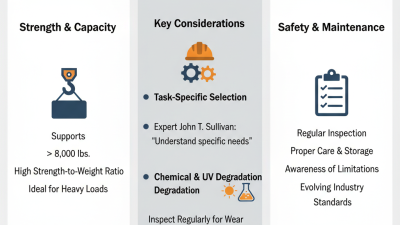
2026 Top Nylon Slings for Global Buyers
The 2026 market for nylon slings reflects a wider shift toward lightweight, reusable lifting equipment. Industry reports from Grand View Research and MarketsandMarkets show continued growth in global material-handling and lifting-equipment demand. However, nylon slings remain a specialized product category, not a simple commodity.
Selection should begin with working load limits, sling configuration, lifting angle, temperature, abrasion, and chemical exposure. ASME B30.9 and EN 1492-1 provide important reference points for inspection, labeling, and safe use. OSHA guidance also emphasizes removing damaged slings from service. A frayed edge, melted fiber, or unreadable tag can change a safe lift into an uncertain one.
Mike Parnell, a recognized rigging educator and lifting-industry trainer, has said, “The load, the hitch, and the environment must be evaluated together.” That principle deserves attention.
Our 2026 guide compares nylon slings for international buyers using practical criteria. These include traceable documentation, tested capacity, stitching quality, protective sleeves, supplier experience, and after-sales support. A bright tag is useful. It is not proof of quality by itself.
Some product rankings may still feel imperfect. Supplier data can vary. Field performance can differ from laboratory results. Buyers should verify certificates, inspection procedures, and local compliance before purchasing. The best nylon slings are not simply the strongest-looking products. They are the ones that match the load, lifting method, workplace conditions, and responsible operator judgment.
Nylon Slings: Definition, Types, and Essential Applications
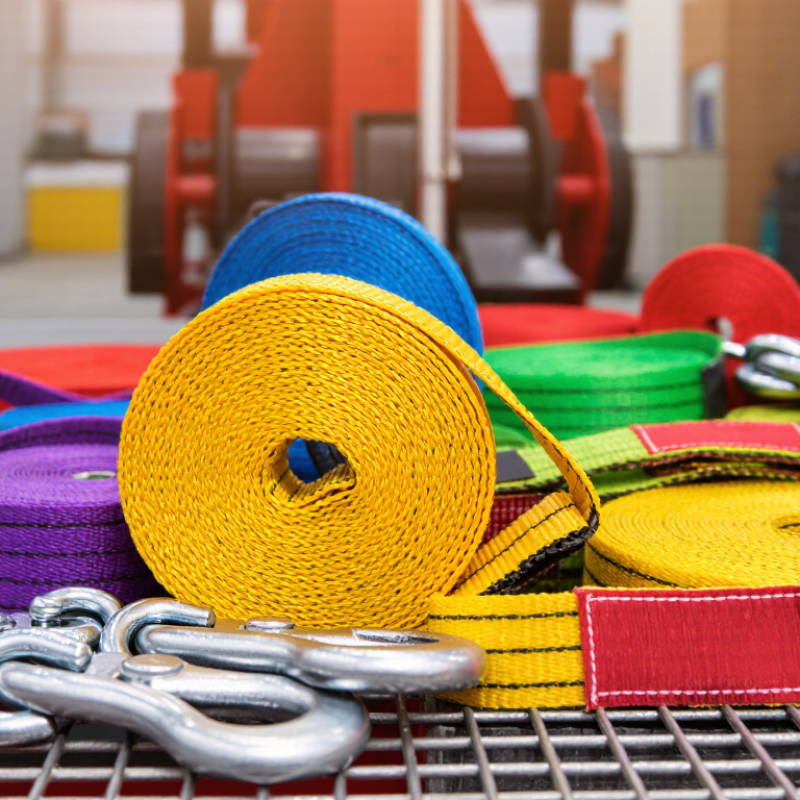
Nylon slings are flexible lifting devices made from woven synthetic fibers. They connect loads to cranes, hoists, or other lifting equipment. Their soft surface helps reduce scratches on painted, polished, or finished materials. However, “soft” does not mean risk-free. Every sling requires a visible label, rated capacity, and proper inspection.
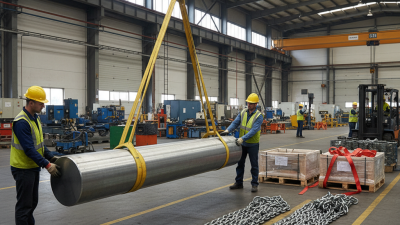
Common types include eye-and-eye slings, endless slings, flat web slings, and round slings. Eye-and-eye models support several hitch arrangements. Endless slings wrap around loads and allow adjustment around different shapes. Round slings distribute pressure through a protected fiber core. In warehouses, shipyards, construction sites, and manufacturing plants, workers use them for machinery, steel parts, pipes, timber, and packaged equipment. The lifting angle, hitch method, load balance, and edge condition can change performance significantly.
Tips: Check for cuts, melted fibers, broken stitching, chemical damage, and missing labels before every lift. Use edge protection on sharp corners. Keep nylon away from excessive heat and incompatible chemicals. Never exceed the marked working load limit. A short pause matters. I have seen teams focus on sling strength while overlooking load balance. That mistake deserves more attention. When conditions are uncertain, stop the lift and consult a qualified lifting professional or applicable local standard.
Key Performance Standards for Choosing Nylon Slings in 2026
2026 Top Nylon Slings for Global Buyers
Key Performance Standards for Choosing Nylon Slings in 2026
Nylon slings should be selected by verified working load limit, not appearance. The U.S. Bureau of Labor Statistics recorded 1,069 fatal injuries in transportation and material-moving occupations in 2023. Lifting failures are not always the cause, but this figure shows why control matters. Under OSHA 1910.184, synthetic web slings require inspection before use and during operations when conditions change. Buyers should request batch identification, test certificates, sling length, width, rated angles, and clear load tags.
EN 1492-1 commonly applies a 7:1 design factor for textile slings, while ASME B30.9 uses different criteria for design, inspection, and use. These standards should not be treated as interchangeable. Nylon performs well under shock absorption, but acids, sharp edges, ultraviolet exposure, and excessive heat can reduce safety. Use edge protection at every contact point. Keep the sling away from welding sparks and rough steel corners. Small cuts matter.
A practical warehouse check includes flattening, pulled stitching, discoloration, hard spots, and damaged labels. Remove doubtful slings immediately. Do not “use it once more.” That habit is expensive. The European Agency for Safety and Health at Work repeatedly identifies poor equipment maintenance and inadequate training as major workplace risks.
Still, paperwork alone cannot prove field performance. I would also verify independent testing, calibration records, and inspector competence. Some buying teams overlook angle effects, then discover that a two-leg sling carries far less than its vertical rating. That mistake deserves more attention in 2026.
Top Nylon Sling Designs for Different Lifting Requirements
2026 Top Nylon Slings for Global Buyers
Top Nylon Sling Designs for Different Lifting Requirements
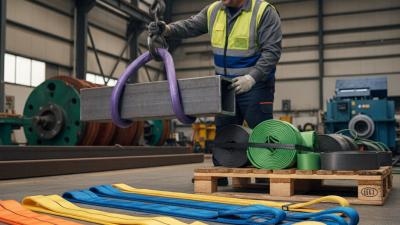
Nylon slings suit many lifting tasks because they are flexible, lightweight, and gentle on painted surfaces. The right design depends on load shape, weight, lifting angle, and connection method. Flat eye-and-eye slings work well for balanced loads with clear lifting points. Endless slings wrap around beams, pipes, and irregular equipment. They also allow quick adjustment during positioning.
Basket configurations can support larger loads when the sling remains evenly balanced. Choker configurations help secure bundles, but they reduce capacity and require careful angle control. Wider slings distribute pressure across delicate surfaces. Protective sleeves can reduce abrasion from sharp edges, though they cannot replace proper edge protection.
Small details matter.
During procurement, check the readable identification tag, rated capacity, length, stitching, and material condition. Never estimate capacity from color alone. A wet, cut, stretched, or chemically damaged sling should be removed from service and assessed by a qualified person. Buyers should compare the supplier’s technical data with applicable local lifting requirements. Requirements differ between markets, and translated documents may contain errors.
In practical use, workers often focus on the sling body and overlook the hardware connection. That mistake deserves attention. The load must remain stable, and the sling should not twist or cross under tension. I would also leave room for inspection feedback after early jobs. A design that looks efficient in a catalog may become awkward around real machinery. Reliable selection combines documented ratings, trained operators, and honest review of field performance.
2026 Top Nylon Slings for Global Buyers
Top Nylon Sling Designs for Different Lifting Requirements
The chart shows rounded reference working load limits for a typical 50 mm (2 in) nylon web sling under common lifting configurations. Basket hitches generally provide the highest capacity, while choker hitches reduce capacity. Actual limits depend on sling construction, hitch angle, edge protection, temperature, wear, and applicable lifting standards. Always confirm the certified working load limit before use.
Safety Inspection, Handling, and Maintenance Procedures
2026 Top Nylon Slings for Global Buyers
Safety Inspection, Handling, and Maintenance Procedures
Nylon slings support lifting work only when inspection and handling remain disciplined. Before each use, check the full webbing under good lighting. Look for cuts, pulled threads, abrasion, melted fibers, discoloration, and chemical stains. Examine stitching, eyes, labels, and connecting hardware closely. A damaged label can hide important capacity information. Do not rely on appearance alone. Internal weakening may not be visible. Remove any sling from service when damage, contamination, or uncertainty exists. Record inspection dates, findings, and the person responsible. This simple habit improves traceability and encourages professional judgment.
During lifting, center the load and confirm that the sling angle suits the rated capacity. Protect the webbing from sharp edges with suitable padding. Keep hands and feet away from the load path. Avoid sudden loading, dragging, twisting, and contact with hot surfaces. Nylon can absorb moisture and may react poorly to certain chemicals, so verify compatibility before use. Never knot a sling or shorten it with improvised methods. Mistakes happen, especially under schedule pressure. A second check can prevent a serious incident.
Tips: Clean nylon slings with mild soap and cool water. Let them air-dry fully away from heat and direct sunlight. Store them on a clean rack, not on a damp floor. Keep inspection records with the equipment. Recheck after unusual loading.
Global Buying Guide: Suppliers, Certifications, and Total Cost Factors
For global buyers, nylon sling selection starts with supplier evidence, not a low quotation. Request recent test reports, material specifications, breaking-strength data, and batch traceability. An ISO 9001 certificate indicates a management system, but it does not prove every sling meets its rated capacity. Check relevant standards, such as EN 1492-1 or ASME B30.9, according to the destination market. Independent inspection can expose weak stitching, uneven webbing, or unclear labels before shipment. Paperwork matters.
Total cost extends beyond unit price. Include tooling, sampling, laboratory testing, export packaging, freight, duties, insurance, and local handling. Compare landed cost per usable sling, not cost per carton. A cheaper sling may need earlier replacement if ultraviolet exposure, abrasion, or moisture is underestimated. Ask suppliers for service-life guidance and storage instructions. Some estimates still miss port delays and currency changes. That is an uncomfortable gap. Build a contingency line into the budget.
Tips: Give every supplier the same lifting scenario, including load weight, sling length, hitch type, temperature, and edge conditions. Require photos of labels and stitching. Verify report numbers with the testing body when possible. Keep a small pre-shipment sample; it may reveal production differences that documents hide. Suppliers sometimes provide excellent certificates but inconsistent factory control. Check again.