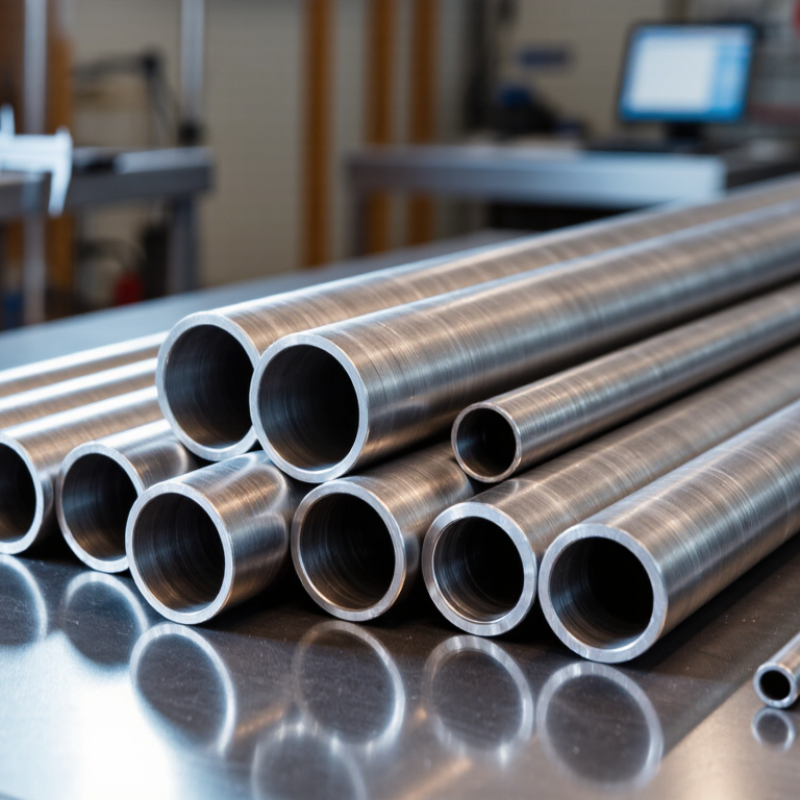
Choosing a Gr5 Titanium Tube supplier in 2026 takes more than comparing prices. Global buyers need evidence that a supplier can deliver consistent material, clear documentation, and reliable communication. Grade 5, or Ti-6Al-4V, is valued for its strength-to-weight ratio and corrosion resistance, but those qualities do not excuse weak quality controls.
Metallurgist Matthew J. Donachie Jr., author of Titanium: A Technical Guide, offers a useful perspective. Paraphrased, not quoted verbatim, his technical guidance is: “Match the alloy to its service conditions, then verify the product.” That is practical advice. Buyers should confirm chemical and mechanical test results, dimensions, tolerances, heat-treatment records, and traceability. Ask whether inspection reports match the actual tube lot, not merely a sample. A polished surface can look reassuring. It proves very little by itself.
This guide compares suppliers using criteria that matter after the purchase order: manufacturing capability, inspection methods, certifications, lead times, export packing, and responsiveness to technical questions. For example, a buyer specifying thin-wall tubing should request tolerances and inspection details in writing. A mill certificate matters, but it does not replace application-specific review. Supplier rankings also have limits; capabilities change, and published claims may not tell the whole story. That deserves a second look. Use the shortlist as a starting point, then verify current documentation and sample performance before committing to a critical order. Reliable sourcing is rarely flashy. It is careful, documented, and sometimes slower than expected.
Grade 5 titanium is commonly known as Ti-6Al-4V. Its main alloying elements are aluminium and vanadium, with titanium making up the balance. Under widely used specifications, composition limits also control impurities such as oxygen, iron, carbon, and hydrogen. Small differences matter. A chemistry report should be checked against the exact grade and standard named on the order.
The alloy combines high strength with relatively low weight and useful corrosion resistance in many industrial environments. It is not as easily formed as commercially pure titanium, and welding requires suitable procedures and clean surfaces. A tube’s performance also depends on its dimensions, manufacturing route, heat treatment, and service conditions. Grade alone tells only part of the story.
ASTM B338 covers seamless and welded titanium and titanium-alloy tubes, including Grade 5. Buyers should confirm the applicable edition, delivery condition, dimensional tolerances, testing, and documentation requirements before ordering. Ask for traceable inspection records, not just a grade label. A certificate may look complete yet leave an important detail unclear. That deserves a closer review. The right specification is the one that matches the actual application, not merely the one copied from an older purchase.
Grade 5 titanium (Ti-6Al-4V) is an alpha-beta alloy valued for its strength-to-weight ratio and corrosion resistance. The chart shows selected Grade 5 composition limits by weight.
Reading the chart: Aluminum and vanadium are specified as ranges; the other listed elements are maximum limits. Titanium is the balance. ASTM B338 covers titanium and titanium-alloy tubes; confirm the applicable grade, product requirements, and specification edition with the purchaser.
Gr5 titanium tubes, made from Ti-6Al-4V, combine high strength with relatively low weight. In aerospace systems, they can carry hydraulic fluid or support fuel and air lines, where reducing mass matters. Engineers still check pressure, temperature, vibration, and fatigue life before specifying them. Strong material does not mean effortless design.
Chemical-processing equipment may use Gr5 tubes where corrosion resistance helps protect fluid-handling systems. Marine equipment can also benefit from their resistance to seawater, though crevices and contact with dissimilar metals need attention. Some medical-device assemblies use titanium tubing for its strength and biocompatibility. The exact grade and surface finish must match the device requirements. A tempting assumption is that one alloy suits every service; it does not.
Tips: Confirm tube dimensions, wall thickness, and material certificates before fabrication. Ask how the supplier controls heat treatment and inspection. For a real installation, review weld procedures and service conditions with a qualified engineer. A small mismatch can matter. Check for it early.
Global buyers usually encounter four Gr5 titanium tube supplier types: integrated producers, specialist tube mills, stockists, and processing distributors. Integrated producers may offer stronger control over melting and material traceability. Specialist mills focus on tube dimensions, wall thickness, and seamless or welded production. Stockists can ship common sizes quickly, but unusual specifications may take longer. Processing distributors may cut tubes to length or provide inspection support. Fit matters.
The USGS Mineral Commodity Summaries 2025 presents country-level titanium sponge production data, showing that upstream supply is concentrated among a limited number of producing economies. This is not a direct measure of tube availability, but it can help buyers assess supply-chain exposure. Ask each supplier for heat-number traceability, chemical analysis, mechanical test results, and the stated manufacturing route. For applicable condenser and heat-exchanger tubes, ASTM B338 provides requirements for titanium and titanium-alloy tubing; confirm that the specified grade and product form match the purchase order. A polished certificate is useful, but it cannot replace checking dimensions and surface condition on received material. Imperfect records happen. Verify them before production starts.
| Supplier Type | Typical Gr5 Tube Offering | Potential Advantages | What Buyers Should Verify | Often Suited To |
|---|---|---|---|---|
| Integrated titanium tube manufacturer | Mill-produced Grade 5 (Ti-6Al-4V) tubing, potentially in multiple sizes and supply conditions. | Direct access to production information and, where available, traceability from material melt through finished product. | Applicable product specification, manufacturing route, dimensional tolerances, inspection plan, heat or lot traceability, and material test certificates. | Buyers placing repeat orders, project quantities, or orders requiring detailed quality documentation. |
| Specialty tube mill | Tube products focused on particular manufacturing routes, dimensions, surface finishes, or tighter tolerances. | May offer more focused process expertise and options for non-standard dimensions or controlled production requirements. | Whether the requested Grade 5 condition and dimensions are routinely produced; confirm minimum order quantity, lead time, and inspection capability. | Engineering and industrial buyers with defined dimensional or process requirements. |
| Metal stockist or service center | Stocked tubing or cut lengths sourced from qualified producers, subject to current inventory. | Potentially shorter delivery for available stock and smaller order quantities than a production run. | Actual stock status, original producer, country of origin, material identification, certificate traceability, and whether cutting affects documentation or inspection needs. | Maintenance, prototyping, and buyers needing limited quantities or faster shipment. |
| Tube fabricator or processor | Purchased Grade 5 tube supplied with additional cutting, bending, machining, or other agreed processing. | Can consolidate material supply and downstream processing into one purchase. | Responsibility for material traceability after processing, dimensional inspection, process controls, and acceptance criteria for the finished part. | Buyers seeking semi-finished components rather than raw tube alone. |
| Export distributor or trading supplier | Products sourced from one or more mills and offered for international delivery. | May coordinate export documentation, logistics, and sourcing across different production locations. | Identify the actual manufacturer; confirm origin, certificate authenticity, applicable trade terms, packaging, shipping route, and claims-handling process. | Global buyers who need coordinated sourcing and international shipment support. |
| Specialist aerospace or high-specification materials supplier | Grade 5 tube offered against a specified industry or customer requirement, where the supplier has qualified scope. | May have established documentation, inspection, and change-control processes for demanding applications. | Exact specification and revision, approved-source status if required, product form and condition, testing scope, and complete lot-level records. | Programs with formal qualification, audit, or material-control requirements. |
A Gr5 titanium tube should be judged by traceable evidence, not a polished catalogue. The USGS Mineral Commodity Summaries 2025 estimates global titanium sponge production at roughly 330,000 metric tons in 2024. That upstream figure signals a concentrated supply chain; it does not prove a tube’s quality or availability. Ask suppliers about melt origin, production route, lead times, and how each heat number follows the tube through inspection and shipping.
Check the material test certificate against the purchase specification. For tubing, ASTM B338 provides requirements for titanium and titanium-alloy tubes, including Grade 5. Confirm chemistry, tensile results, dimensions, and heat-treatment condition. Then match the certificate’s heat number to the tube markings. A mismatch is a warning. Request inspection records and appropriate nondestructive-test results, especially for pressure-bearing service. Look closely at the tube ends, too: clean cuts, no visible cracks, and consistent wall thickness are useful clues, but not proof.
A practical supplier review includes a sample document audit and, where feasible, a first-article inspection. Ask how out-of-tolerance material is isolated and reported. Responses should be specific, not merely reassuring. I would still treat paperwork as one layer, not a guarantee; records can be complete while a measurement is wrong. Compare independent test results when the application carries high consequences, and keep acceptance criteria written before ordering.
In 2026, buying Grade 5 titanium tube globally means comparing more than the quoted price. Ask whether the tube is seamless or welded, and specify outside diameter, wall thickness, length, and tolerance. Grade 5 usually refers to Ti-6Al-4V, but confirm the applicable material standard and condition in writing. Request a lot-specific test certificate, heat-number traceability, and inspection records before approving production. Small details matter. A polished sample can look excellent while its ovality or wall variation misses the drawing. That’s an easy oversight.
Pricing should separate material, cutting, testing, packing, and freight instead of hiding them in one line. Compare quotes at the same quantity and delivery term. Otherwise, a low unit price may shift costs to transport or handling. Confirm minimum order quantities, payment milestones, and whether production starts after drawing approval. Lead times need a buffer. Mill capacity, inspection queues, and export packing can all affect the ship date. For ocean freight, check crate dimensions and protective packaging; urgent air freight may cost more than the tube itself. Ask for a realistic dispatch window, not just an optimistic estimate. Then review import documents with your broker before shipment. Paperwork gaps are boring, but delays are not.


